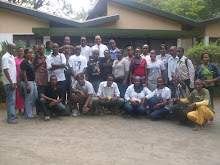
Pugu story dates back slightly before early 1990s and it has survived the test of time.
The impressions “The lack of success of the previous attempts may have been due to poor timing, we feel that the present rate of destruction of both forests and the growing awareness among FBD decision makers in combination with a concerted mobilization of concerned Forestry Experts and Environmentalists, will make a difference this time”.
Kik van den Heuvel
Pugu Hills
www.puguhills.com
My feelings after our last field visit to sand mines are as follows;
Pugu is there to stay you can not stop business which the product is wanted you just push it into the underground, you make it more profitable and luxurious, you create conducive room for corruption and bribery and high degree of involvement in corruption at all levels. You promote artificial demand and people rush for it at any cost
You encourage a situation of no body owns no body cares, you make us all loose the intended benefits, the government loose revenue, adjacent communities loose profit and confidence (the business loose profit margins – corruption)
WHO IS YOU in this aspect?
What to do:
a)Legalize the communities adjacent to the area and let them own the sand mines and pay appropriate government taxes,
b)Assist them to conduct environmental impact Assessment of the area and their activities as stipulated in environmental laws of 2004
c)Encourage them to rehabilitate the area following up the EIA
I agree that the second stage will include communication with the surrounding communities and stakeholders regarding the new management initiative and the involvement of the communities and stakeholders in the management of the Forests.
If it does not grow maize to feed people what good is it for? Meet needs of present generation without compromising the future needs is the only way.
David Kabati
jichokwavijana@gmail.com
Monday, June 15, 2009

INADEQUATE PARTICIPATION IMPOSES DEFORESTATION IN MOROGORO RURAL AREAS
It has bee observed that severely deforestation in Morogoro rural areas is due to inadequate participation of people around the rural areas and other stockholders where most of people MorogoroVillage district are living closely to forest but they are not aware on appropriate use of forest product and sustainable conservation. Also, other stakeholders do not participate well to face various challenges like illegal harvest of forest products and bush burning
In fact the district authority is a responsible stakeholder to link other stakeholders within district on the effective participation of every stakeholder to conserve forest in Morogoro Village district. The insufficiency of participation has been realized where a number of members community do not know procedures to be followed when they want to use forest products. District Authority has all procedures but people in rural areas are not aware with those steps to be followed.
The availability of adequate participation provides a general opportunity to conserve our natural resources/forests at different levels, because each and every individual will play his/her part to conserve forest as part of his living. This could be done through creating awareness to individuals. This can be achieved through imposition of education, planting tees campaign e.t.c
I would like advice the district authority to link all stakeholders on sustainable forest conservation at Morogoro Village District so that to rescue the vulnerability of forest in our district.
Angelus Runji
runjifred@yahoo.com
In fact the district authority is a responsible stakeholder to link other stakeholders within district on the effective participation of every stakeholder to conserve forest in Morogoro Village district. The insufficiency of participation has been realized where a number of members community do not know procedures to be followed when they want to use forest products. District Authority has all procedures but people in rural areas are not aware with those steps to be followed.
The availability of adequate participation provides a general opportunity to conserve our natural resources/forests at different levels, because each and every individual will play his/her part to conserve forest as part of his living. This could be done through creating awareness to individuals. This can be achieved through imposition of education, planting tees campaign e.t.c
I would like advice the district authority to link all stakeholders on sustainable forest conservation at Morogoro Village District so that to rescue the vulnerability of forest in our district.
Angelus Runji
runjifred@yahoo.com
A GREAT ATTENTION AND QUICK ACTIONS ARE NEEDED FOR PUGU FOREST RESERVE
The Government is required to give a gret attention to Pugu Forest Reserve in Kisarawe district- Kibaha region that is among the great forests in Tanzania with a wonderful scenic beauty and rich in variety of tree species. Despite this, the forest is highly threatened with destruction through human activities the major one being charcoal production. It is said that in few years ago the forest was very rich in hardwood, to date only few hardwood species exist. But charcoal production is not the only reason for destruction of Pugu Forest Reserve the other factor is mining activities that are taking part in some areas of the forest that results in deforestation and soil erosion.
In Minaki area stone mining has been taking place for about five years now. Some people from TANROAD came here in year 2005 they took some technical measurements, cleared the forest and start extracting sand and stones for building the Kisarawe road. After one year the company went off and left the area with big pits without doing land reclamation therefore it brought a chance for individuals to come and take over with the activity to date, reports one of the miners at Minaki stone mining area.
The Young Environmentalist Trainees (YETs) under the sponsor of WWF- Tanzania programme had a one day field trip to Kisarawe. The purpose of the trip was to visit one of the CSOs called Vijana Vision Tanzania (VVT) and Pugu sand mining area. VVT being one of the CSOs that deals with management of Natural Resources shared with us on how they conduct their daily activities including the challenges they face in managing the forests that are within their project area. They mentioned the Pugu and Kazimzumbwi forest reserves as big forests that are within their project area.
On his speech the Executive Director mentioned the challenges that his organization is facing in managing the two mentioned forests he said, The Government through the Ministry of Natural Resources and Tourism under the department of Forest and Beekeeping has been a drawback to participatory management of forests as per new Forest regulation of 2002. There has been some propaganda about doing participatory forest management.
One of the village leader reported that three years ago they wrote a letter to the Ministry through the District authority asking for permission to manage the forest as the Forest Policy says about Forest Participatory Management (FPM) but till today they haven’t receive any answer. It is said that the problem of not acting toward the policy has been due to the issue of cost benefit sharing from the forest. This might be the reason for the increase of human activities that lead to destruction of the forests such as charcoal production, mining, timber cropping and other activities.
It was proposed by the central Government that people that are mining in Minaki at Pugu Forest Reserve should be evicted from the area and be shifted to Kazimzumbwi where they will go on mining stones and sand. Up to today its not yet done that means that those miners are going on mining in Minaki stone mining area. They want us to shift to the area which has no water and poor road facilities how are we going to survive there, asked one of the miners who were interviewed by YETs.
He went on saying that here in Minaki we do fetch water from Minaki Secondary school for cooking, bathing and washing our clothes we are not ready to leave this area with important facilities and go to Kazimzumbwi unless other wise if the Government is going to take action to make sure that they are available there at Kazimzumbwi before we shift. Here our customers are easily accessing us because of good infrastructure but if we go there now we might miss all of our customers therefore our business will be non-profitable so by realizing that we nobody amongst us is ready to shift to Kazimzumbwi.
Through the interviews with the miners it was discovered that there is no good relationship between the leaders such as the District Commissioner (DC) and other local leaders.
A man who was interviewed said that, the DC is treating them so harshly because one day she commanded a track full of stones to go and unload at the school ground so that it will be used for building that school, he said if the DC could come to them in a harmonious way and ask them to contribute one lorry of stones for building that school they could do it in peace since their children are the one who will benefit by getting education instead of the way she did. By doing so she is creating a kind of enemity between the government and us seeing that the government is neglecting our rights because we are here struggling to find some money for our survival and the government is mistreating us where should we go? Is it fair for our own leaders whom we voted for treating us like this, the man asked bitterly.
There is a need for the government to find quick solution for this problem through a round table conversation between the local and central leaders and local communities to reach a peaceful consensus YETs as changing agents we are calling upon a great attention and quick action for the Government because its our Natural Resources that are deteriorating instead of being utilized sustainably for the benefit of our Nation.
The government should stop promising things that are tough for them to implement. Also the Ministry of Natural Resources and Tourism should be fast and acting upon its Policies, Laws and Regulations that are of great use towards achieving sustainable management of natural resources.
Participatory Management of Natural Resources such as Wildlife, Forests and Fishery should be given a priority in attaining sustainable management of natural resources and so as to obtain its contribution to the national GDP while sharing the benefits to the local people improving their livelihoods.
The government also should work hand to hand with the CSOs that are dealing with Environmental Issues since they are the one who have good experience in working close to the local communities in their daily implementation of their projects towards achieving their mission and goals.
The Government should seek to have round table conversation with the local communities while making some decisions that may affect their livelihoods instead of using forces and other bad approaches.
Local communities should participate actively from the initial stages of any planning and decision making processes concerning the management and utilization of natural resources instead of being commanded to act upon what has been decided already.
If these will be done effectively, the local communities will feel as they are concerned in management of natural resources and if they destroy or do any mismanagement activities it will cost them and their future generations.
Also more education is needed for the local communities to understand the importance of conserving our natural resources in participatory means.
We have remained with few forest Reserves that are of great potential and they are still surviving from human activity destructions; let us conserve them seriously in a participatory way and sustainably.
Victoria Maeda,
posh_vk@yahoo.com
In Minaki area stone mining has been taking place for about five years now. Some people from TANROAD came here in year 2005 they took some technical measurements, cleared the forest and start extracting sand and stones for building the Kisarawe road. After one year the company went off and left the area with big pits without doing land reclamation therefore it brought a chance for individuals to come and take over with the activity to date, reports one of the miners at Minaki stone mining area.
The Young Environmentalist Trainees (YETs) under the sponsor of WWF- Tanzania programme had a one day field trip to Kisarawe. The purpose of the trip was to visit one of the CSOs called Vijana Vision Tanzania (VVT) and Pugu sand mining area. VVT being one of the CSOs that deals with management of Natural Resources shared with us on how they conduct their daily activities including the challenges they face in managing the forests that are within their project area. They mentioned the Pugu and Kazimzumbwi forest reserves as big forests that are within their project area.
On his speech the Executive Director mentioned the challenges that his organization is facing in managing the two mentioned forests he said, The Government through the Ministry of Natural Resources and Tourism under the department of Forest and Beekeeping has been a drawback to participatory management of forests as per new Forest regulation of 2002. There has been some propaganda about doing participatory forest management.
One of the village leader reported that three years ago they wrote a letter to the Ministry through the District authority asking for permission to manage the forest as the Forest Policy says about Forest Participatory Management (FPM) but till today they haven’t receive any answer. It is said that the problem of not acting toward the policy has been due to the issue of cost benefit sharing from the forest. This might be the reason for the increase of human activities that lead to destruction of the forests such as charcoal production, mining, timber cropping and other activities.
It was proposed by the central Government that people that are mining in Minaki at Pugu Forest Reserve should be evicted from the area and be shifted to Kazimzumbwi where they will go on mining stones and sand. Up to today its not yet done that means that those miners are going on mining in Minaki stone mining area. They want us to shift to the area which has no water and poor road facilities how are we going to survive there, asked one of the miners who were interviewed by YETs.
He went on saying that here in Minaki we do fetch water from Minaki Secondary school for cooking, bathing and washing our clothes we are not ready to leave this area with important facilities and go to Kazimzumbwi unless other wise if the Government is going to take action to make sure that they are available there at Kazimzumbwi before we shift. Here our customers are easily accessing us because of good infrastructure but if we go there now we might miss all of our customers therefore our business will be non-profitable so by realizing that we nobody amongst us is ready to shift to Kazimzumbwi.
Through the interviews with the miners it was discovered that there is no good relationship between the leaders such as the District Commissioner (DC) and other local leaders.
A man who was interviewed said that, the DC is treating them so harshly because one day she commanded a track full of stones to go and unload at the school ground so that it will be used for building that school, he said if the DC could come to them in a harmonious way and ask them to contribute one lorry of stones for building that school they could do it in peace since their children are the one who will benefit by getting education instead of the way she did. By doing so she is creating a kind of enemity between the government and us seeing that the government is neglecting our rights because we are here struggling to find some money for our survival and the government is mistreating us where should we go? Is it fair for our own leaders whom we voted for treating us like this, the man asked bitterly.
There is a need for the government to find quick solution for this problem through a round table conversation between the local and central leaders and local communities to reach a peaceful consensus YETs as changing agents we are calling upon a great attention and quick action for the Government because its our Natural Resources that are deteriorating instead of being utilized sustainably for the benefit of our Nation.
The government should stop promising things that are tough for them to implement. Also the Ministry of Natural Resources and Tourism should be fast and acting upon its Policies, Laws and Regulations that are of great use towards achieving sustainable management of natural resources.
Participatory Management of Natural Resources such as Wildlife, Forests and Fishery should be given a priority in attaining sustainable management of natural resources and so as to obtain its contribution to the national GDP while sharing the benefits to the local people improving their livelihoods.
The government also should work hand to hand with the CSOs that are dealing with Environmental Issues since they are the one who have good experience in working close to the local communities in their daily implementation of their projects towards achieving their mission and goals.
The Government should seek to have round table conversation with the local communities while making some decisions that may affect their livelihoods instead of using forces and other bad approaches.
Local communities should participate actively from the initial stages of any planning and decision making processes concerning the management and utilization of natural resources instead of being commanded to act upon what has been decided already.
If these will be done effectively, the local communities will feel as they are concerned in management of natural resources and if they destroy or do any mismanagement activities it will cost them and their future generations.
Also more education is needed for the local communities to understand the importance of conserving our natural resources in participatory means.
We have remained with few forest Reserves that are of great potential and they are still surviving from human activity destructions; let us conserve them seriously in a participatory way and sustainably.
Victoria Maeda,
posh_vk@yahoo.com
Wednesday, June 10, 2009
PUGU AGGREGATE MINERS THROWING CHALLENGES TO THE GOVERNMENT ON ENVIRONMENTAL DEGRADATION IN PUGU FOREST.
Pugu forest reserve which located in Kisarawe districts and managed under local government authority is in great risk to vanish due to illegal ongoing aggregate mining activities inside the reserve, according to my insight of the area during 13 April 2009; I got opportunity to have a dialogue with aggregate miners, on this issue.
“They claim that environmental degradation increases in this forest due to poor land use planning and poor governance,
also the government for the most part central government were the one who initiate the sand mining excavate in this forest for their own interest, mainly to the road constructor investor, without measure the impact of their action to the forest environment.
They continue to declare that, after the government investor close its activities and left the mining hole, and then we cover up the place and continue to digging sand for sale to diverse customer from different area of Dar as salaam in order to get something to take care for us and our families they say.
They blame the local government for their thought of stop them to continue with mining activities within the forest without compensate them with another place which is beneficial to them, instead the Pugu district government odder the village government to throw the miners to another area which is very far away, with poor road that hinder their client to access their products, that why we are still here and carry on with our activities which we depend on for our daily life.”
My advice to government is to making harmonize agreement with the aggregate miners for the sake of sustainability of Pugu forest reserve, also to the aggregate miners have agreed to stop mining activities in the area because according to the forest Act Of year 2002 they are strongly breaking the law by doing illegal mining activities in the reserve.
nginyi kimaai
nginyikariongi@gmail.com
“They claim that environmental degradation increases in this forest due to poor land use planning and poor governance,
also the government for the most part central government were the one who initiate the sand mining excavate in this forest for their own interest, mainly to the road constructor investor, without measure the impact of their action to the forest environment.
They continue to declare that, after the government investor close its activities and left the mining hole, and then we cover up the place and continue to digging sand for sale to diverse customer from different area of Dar as salaam in order to get something to take care for us and our families they say.
They blame the local government for their thought of stop them to continue with mining activities within the forest without compensate them with another place which is beneficial to them, instead the Pugu district government odder the village government to throw the miners to another area which is very far away, with poor road that hinder their client to access their products, that why we are still here and carry on with our activities which we depend on for our daily life.”
My advice to government is to making harmonize agreement with the aggregate miners for the sake of sustainability of Pugu forest reserve, also to the aggregate miners have agreed to stop mining activities in the area because according to the forest Act Of year 2002 they are strongly breaking the law by doing illegal mining activities in the reserve.
nginyi kimaai
nginyikariongi@gmail.com
POVERTY & POOR GOVERNMENT POLICY CONTRIBUTE TO THE ENVIRONMENTAL DEGRADATION IN PUGU FOREST
Rocks mining contribute to the Forest degradation in Kisarawe district, more than 50 youngmen engaged in this rocks mining, Most of them have families to feed on.
Mr. Abdallah Haji one of the small rocks miner said they are poor and their life depends on that rocks mining, the government provided loan for them but there is bias. No small industry or factory in Kisarawe, their farms have been taken by the government with no compensation
Another small rocks miner said even police officers always say yes for small miners because by engaging in that activity they reduce violence/robbery in the street
There is Administration contradiction between RC and DC.RC said small miners had to wait for the good decision from RC office but later DC ordered them to leave in any time she wish, but small miners still claim where the DC wants to take them to, the place where DC wants them to go there is no good infrastructure of road even water.
We have to think; shifting them to another place while continuing doing the same activity, is it constructive? While we want to reduce the dependence of people on forest sector??
But degradation started days back in 2004 when big construction companies like UNICO beginning to construct the road from Kisarawe to Dar es Salaam
This time takes another face when small rocks miners entered there to find their daily bread. For this case I can predict days to come if the situation still the same the environment will be more degradated, and on other side social conflict will erupt and insecurity of people will increase because government wants to evict them without giving them any alternative way of sustain their life, so many young men with low level of education will enter the street without any activity to make them survive.
But the government, CSOs, I international organization and donors have something to do to help the poor community of Kisarawe to reduce the highly dependence on forest sector to survive.
First, of all loans is very important to these people, loans with no bias. The district government and village government should take responsibility for being the referees for these people
Second, strengthening in Agriculture, because is only affordable way of rural areas, for example insisting on cultivation of cassava, therefore the government should tell the investors to open small scale industry for cassava bread processing ,because cassava has no big market, so for doing that small scale industry will employ local people and also buying cassava from farmers.
Third, the government should strength the capacity of cooperatives unions, because by doing so the farmers will get moral of cultivating more and the cooperatives will be able to buy more and more as well as possible
Lastly, also more small scale processing industries for cashew nut should be built at Kisarawe district, because there is no any .People will get employment and will courage farmers to produce more ,there is no need for processing industry to be at Dar es salaam. because now in Kisarawe there is good infrastructure i.e. roads and electricity.
Hussein Mwamba
mwambahussein@yahoo.com
Mr. Abdallah Haji one of the small rocks miner said they are poor and their life depends on that rocks mining, the government provided loan for them but there is bias. No small industry or factory in Kisarawe, their farms have been taken by the government with no compensation
Another small rocks miner said even police officers always say yes for small miners because by engaging in that activity they reduce violence/robbery in the street
There is Administration contradiction between RC and DC.RC said small miners had to wait for the good decision from RC office but later DC ordered them to leave in any time she wish, but small miners still claim where the DC wants to take them to, the place where DC wants them to go there is no good infrastructure of road even water.
We have to think; shifting them to another place while continuing doing the same activity, is it constructive? While we want to reduce the dependence of people on forest sector??
But degradation started days back in 2004 when big construction companies like UNICO beginning to construct the road from Kisarawe to Dar es Salaam
This time takes another face when small rocks miners entered there to find their daily bread. For this case I can predict days to come if the situation still the same the environment will be more degradated, and on other side social conflict will erupt and insecurity of people will increase because government wants to evict them without giving them any alternative way of sustain their life, so many young men with low level of education will enter the street without any activity to make them survive.
But the government, CSOs, I international organization and donors have something to do to help the poor community of Kisarawe to reduce the highly dependence on forest sector to survive.
First, of all loans is very important to these people, loans with no bias. The district government and village government should take responsibility for being the referees for these people
Second, strengthening in Agriculture, because is only affordable way of rural areas, for example insisting on cultivation of cassava, therefore the government should tell the investors to open small scale industry for cassava bread processing ,because cassava has no big market, so for doing that small scale industry will employ local people and also buying cassava from farmers.
Third, the government should strength the capacity of cooperatives unions, because by doing so the farmers will get moral of cultivating more and the cooperatives will be able to buy more and more as well as possible
Lastly, also more small scale processing industries for cashew nut should be built at Kisarawe district, because there is no any .People will get employment and will courage farmers to produce more ,there is no need for processing industry to be at Dar es salaam. because now in Kisarawe there is good infrastructure i.e. roads and electricity.
Hussein Mwamba
mwambahussein@yahoo.com
AT LAST SEGOMA FOREST ON TRACK TO BE PROTECTED
Segoma forest reserve with an area of 2186 ha is located in Mkinga District in Tanga region. This forest is surrounded by six villages namely Segoma, Kambai, Kuze-Kibago, Churwa, Mhinduro and Bamba villages. This forest has been in the threat of extermination for so long due to illegal timber harvesting, clearing of forest buffer zones and cutting down tree to be used as fire wood and pole for house construction. This destructive activity has been spearheaded by community living adjacent to the forest in the name of sustaining their lives under the umbrella of having not any other income generating activities. Illegal timber harvesting in this forest is the leading destructive activity and it has persisted for so long now being fore fronted by village leaders surrounding the forest. Villagers are also involved in the activity in one or another. For example Mr. Rashid Choya a Maramba village resident said, women in the villages surrounding the forest used to be hired to carry illegally harvested timber from the forest with the payment of 1500/= per timber per each trip and found it more fruitfully than being engaged in other activities.
Speaking to Tanzania Forest Conservation Group (TFCG) staffs, Young Environmentalist Trainee from WWF Tanzania Programme Office attached with TFCG and Journalist when we visited Mkinga district council, the District Land, Environment and Natural Resource Officer Mr. Cheyo Nkelege, acknowledged Segoma forest problem to have disturbed the district authority for so long. He said, so as to deal with the problem, there are actions that the district under its forest department has taken so far. Among the action taken are frequent patrols in the area on illegal logging that has led to impounding of a lot of timber harvested illegally in the forest. He added that from 1st July to 30 December 2007, Mkinga District Commissioner Mr. Deodatus banned harvesting of all forest products in Mkinga district in a way to fight against the problem. “Though illegal timber harvesting is still going on, but it has started slowing down as compared with some few years as a result of education campaign, patrols and collaboration with other stakeholder like TFCG to educate people on the effect of cutting down trees” said Mr. Cheyo.
After realizing the settings of this problem, TFCG in addition to its East Usambara Forest Landscape Restoration Project, a partnership project between TFCG and WWF TPO, launched a special programme to educate people living adjacent to Segoma forest on forest policy, forest act, advocacy and good governance in forest management as the way to halt the problem. WWF TPO funds this special programme under its programme to strengthen environmental civil society organization of Tanzania (CSOP). This programme was devised after realizing that many people around this reserved forest do not bother to protect the forest as most of them were found not to have knowledge of forest policy, laws governing the forest as well as governance proceeding regarding forest management. The trainings process went on successfully and TFCG conducted a workshop that involved village governments surrounding Segoma forest, Natural resource committees from the same villages, three community networks within the area, district forest catchments authority and district forest department so as to come out with an action plan and a way forward to halt Segoma forest destruction. Participants of this workshop came from Churwa, Mhinduro, Bamba, Kuze and Segoma villages those sorrounding the forest. On the other hand three local networks were MTAHIMKAKI (Mtandao wa uhifadhi mazingira kata ya Kigongoi), SHIWAMAMA (Shirikisho la uhifadhi mazingira kata ya Maramba) and UMAKAM (Umoja wa uhifadhi mazingira kata ya Mhinduro).
Among the actions that were agreed upon was to have a joint forest committee that will be composed of members from all villages surrounding the forest and the committee will be responsible with patrols within the forest in collaboration with the department of forest in Mkinga district. On the other hand the committee will work together with the district to strengthen all checkpoints and adding other checkpoints to break all routes used by poachers to sneak away with illegally harvested forest products from Segoma forest. It was also agreed upon that more sensitization is still needed on the ways of earning their living instead of depending on Segoma forest. Among other income generating activities that has been opted so far, are beekeeping, pond fishing and cash crop farming. Explaining this in details during the workshop, Mr. Rashid Choya a Maramba resident said beekeeping is one of the activities that will fetch tem better income compared to other sources. He said the price of honey has now risen from Tshs 1800 to 3000 per liter so this encouraged us to engage in the business. Adding to this Mr. Choya said TFCG that has introduced the beekeeping project in our village is giving out five beehives free of charge to the one who constructs five beehives. Another alternative income generating activities having been opted so far by many people in those villages is Ocimum kilimascharica cash crop plantation known is Swahili as “Mfuto”. The leaves of this crop produce oil that is used to manufacture painkillers medicine, anti-histamine medicine that treats flue and other many products. The market of this crop is based in Nairobi Kenya by ICIPE Company. One kilogram of leaves is sold at Tshs 250 to 1250. One acre of Ocimum plantation is projected to give out 6570 kilogram to 10500 kilogram of leaves. This has been a good venture for the villagers to engage in to sustain their lives.
Speaking to the workshop Mr. Mwarabu Jumbe Mwarabu an acting district Forest Officer thanked TFCG and WWF TPO for the undertaking they have been doing so far and promised to collaborate with Segoma forest stakeholders in the implementation of the action plan that was agreed upon. “This is the participatory forest management we are always speaking”. Said Mr. Mwarabu.
William Nambiza
nambizaw@yahoo.com
Speaking to Tanzania Forest Conservation Group (TFCG) staffs, Young Environmentalist Trainee from WWF Tanzania Programme Office attached with TFCG and Journalist when we visited Mkinga district council, the District Land, Environment and Natural Resource Officer Mr. Cheyo Nkelege, acknowledged Segoma forest problem to have disturbed the district authority for so long. He said, so as to deal with the problem, there are actions that the district under its forest department has taken so far. Among the action taken are frequent patrols in the area on illegal logging that has led to impounding of a lot of timber harvested illegally in the forest. He added that from 1st July to 30 December 2007, Mkinga District Commissioner Mr. Deodatus banned harvesting of all forest products in Mkinga district in a way to fight against the problem. “Though illegal timber harvesting is still going on, but it has started slowing down as compared with some few years as a result of education campaign, patrols and collaboration with other stakeholder like TFCG to educate people on the effect of cutting down trees” said Mr. Cheyo.
After realizing the settings of this problem, TFCG in addition to its East Usambara Forest Landscape Restoration Project, a partnership project between TFCG and WWF TPO, launched a special programme to educate people living adjacent to Segoma forest on forest policy, forest act, advocacy and good governance in forest management as the way to halt the problem. WWF TPO funds this special programme under its programme to strengthen environmental civil society organization of Tanzania (CSOP). This programme was devised after realizing that many people around this reserved forest do not bother to protect the forest as most of them were found not to have knowledge of forest policy, laws governing the forest as well as governance proceeding regarding forest management. The trainings process went on successfully and TFCG conducted a workshop that involved village governments surrounding Segoma forest, Natural resource committees from the same villages, three community networks within the area, district forest catchments authority and district forest department so as to come out with an action plan and a way forward to halt Segoma forest destruction. Participants of this workshop came from Churwa, Mhinduro, Bamba, Kuze and Segoma villages those sorrounding the forest. On the other hand three local networks were MTAHIMKAKI (Mtandao wa uhifadhi mazingira kata ya Kigongoi), SHIWAMAMA (Shirikisho la uhifadhi mazingira kata ya Maramba) and UMAKAM (Umoja wa uhifadhi mazingira kata ya Mhinduro).
Among the actions that were agreed upon was to have a joint forest committee that will be composed of members from all villages surrounding the forest and the committee will be responsible with patrols within the forest in collaboration with the department of forest in Mkinga district. On the other hand the committee will work together with the district to strengthen all checkpoints and adding other checkpoints to break all routes used by poachers to sneak away with illegally harvested forest products from Segoma forest. It was also agreed upon that more sensitization is still needed on the ways of earning their living instead of depending on Segoma forest. Among other income generating activities that has been opted so far, are beekeeping, pond fishing and cash crop farming. Explaining this in details during the workshop, Mr. Rashid Choya a Maramba resident said beekeeping is one of the activities that will fetch tem better income compared to other sources. He said the price of honey has now risen from Tshs 1800 to 3000 per liter so this encouraged us to engage in the business. Adding to this Mr. Choya said TFCG that has introduced the beekeeping project in our village is giving out five beehives free of charge to the one who constructs five beehives. Another alternative income generating activities having been opted so far by many people in those villages is Ocimum kilimascharica cash crop plantation known is Swahili as “Mfuto”. The leaves of this crop produce oil that is used to manufacture painkillers medicine, anti-histamine medicine that treats flue and other many products. The market of this crop is based in Nairobi Kenya by ICIPE Company. One kilogram of leaves is sold at Tshs 250 to 1250. One acre of Ocimum plantation is projected to give out 6570 kilogram to 10500 kilogram of leaves. This has been a good venture for the villagers to engage in to sustain their lives.
Speaking to the workshop Mr. Mwarabu Jumbe Mwarabu an acting district Forest Officer thanked TFCG and WWF TPO for the undertaking they have been doing so far and promised to collaborate with Segoma forest stakeholders in the implementation of the action plan that was agreed upon. “This is the participatory forest management we are always speaking”. Said Mr. Mwarabu.
William Nambiza
nambizaw@yahoo.com
LIMITED ECONOMIC RESOURCES Vs SEVERE DEVASTATION OF THE PUGU FOREST RESERVE
It was in the mid hours of the day, May 13, 2009 when a team of young environmental trainees with WWF-TPO personnel visited the Pugu Forest Reserve in Kisarawe Village, Coastal Region which is now under a severely devastated situation due to unenvironmentaly friendly activities undertaken at the heart of this potential forest resource. The team witnessed a group of 40 to 50 individual sand miners being busy in the process of mining sands while several trucks parked beside the big mining pits. Some of these individuals were seen working under dangerous land cliffs that might fall any time and cause death to these people but when one of the YET’s members asked one of the sand miners by the name of “Mwili Jumba” to tell him the reason of working under such dangerous environments, he responded that, “Kisarawe yenyewe haina lolote la maana kuniingizia kipato…. Sanasana nifanye biashara ya matunda na mihogo ambayo kila mtu mahali hapa anaitolea macho”. While speaking in Swahili, he meant that he can’t think any kind of work to raise his income rather than sand mining because even the business of fruits and cassavas which is very popular in the area, it is still difficult for him because many people in the area have been doing such kind of business hence no tangible profit can be earned because of stiff competition on such business. With this kind of understanding it is very hard to rescue this forest from these destructive activities unless the government will heavily invest the available resources to capacitize these people with the appropriate education on entrepreneurship and other relevant educations to enhance proper earning of income to sustain their livelihood. It was also spoken by the team that, in Kisarawe Village where the Pugu Forest Reserve is located, people can utilize the forest for activities such as Bee-Keeping and Traditional Herbs selling to raise their income instead of sand mining but also in this, the government should closely work with these people and empower them to improve such activities which can be an alternative source of earning income to these villagers of Kisarawe.
Ally Mbugi,
thabby48@yahoo.ca
Ally Mbugi,
thabby48@yahoo.ca
Wednesday, June 3, 2009
QUARRY ACTIVITIES IN PUGU FOREST WHOM TO BLAME?
Quarry activity is still operating in Pugu forest by local community though the district council announces them to vacate the place.
The Pugu Forest which is located few kilometers from Kisarawe town center is containing diverse species of plants. Local communities conducting quarry activities within the forest using hand tools. This community depends on this activity to obtain their daily income by selling the gravel and other materials extracted from this area.
Due to severe destruction of this forest which results to loss of biodiversity and soil erosion district country announced local community who are doing quarry activity within forest to vacate and move to the new area which is allocated away from this forest. The people are willing to shift to proposed area but them claiming that there is poor infrastructure such as road and the land is not cleared to expose the rock layer because they can’t remove the topsoil layer by using hand tools.
The road contractors and other building companies are the one who starts to do quarry activities in this forest where the use modern technology such as digging machine like excavator, to process gravel and other material for road construction . Due to use of this technology they managed to extract large quantity of materials for short time with great destruction to land and this is what happened to Pugu forest. After the completing the road construction the company abandon the place without covering the area(land restoration) and here is where local community come in and proceed with quarry activity using their hands tool to acquire their daily income. due to severe destruction resulted from this activities government announce people to vacate this area but fail to prepare good working environment in new proposed mining area .So whom to blame district governance or local community?
heri jackson
herij26@gmail.com
The Pugu Forest which is located few kilometers from Kisarawe town center is containing diverse species of plants. Local communities conducting quarry activities within the forest using hand tools. This community depends on this activity to obtain their daily income by selling the gravel and other materials extracted from this area.
Due to severe destruction of this forest which results to loss of biodiversity and soil erosion district country announced local community who are doing quarry activity within forest to vacate and move to the new area which is allocated away from this forest. The people are willing to shift to proposed area but them claiming that there is poor infrastructure such as road and the land is not cleared to expose the rock layer because they can’t remove the topsoil layer by using hand tools.
The road contractors and other building companies are the one who starts to do quarry activities in this forest where the use modern technology such as digging machine like excavator, to process gravel and other material for road construction . Due to use of this technology they managed to extract large quantity of materials for short time with great destruction to land and this is what happened to Pugu forest. After the completing the road construction the company abandon the place without covering the area(land restoration) and here is where local community come in and proceed with quarry activity using their hands tool to acquire their daily income. due to severe destruction resulted from this activities government announce people to vacate this area but fail to prepare good working environment in new proposed mining area .So whom to blame district governance or local community?
heri jackson
herij26@gmail.com
CORRUPT OFFICIALS,JK TELLS CONTRACTORS
President Jakaya Kikwete has challenged contractors and construction stakeholders to name public officials demanding bribes as a condition for approving construction tenders.
Addressing a Contractors Registration Board consultative meeting in Dar es Salaam yesterday, the president said the vice would continue wreaking havoc unless the corrupt officials are exposed and disciplinary action is taken against them.
He described corruption as the number one enemy of the country’s construction industry, as some 60 per cent of government revenue was spent on building projects.
“About 60 per cent of government revenue is spent on construction projects, an industry mentioned as among the most corrupt industries.
If serious steps are not taken to keep corruption out of this industry, the vice will continue eating the country and development will remain dormant,” the president pointed out.
He said because corruption was a game of giving and receiving and there was always someone giving and another receiving, it was important for the people to alert the government on both “and I will have no mercy on them”.
President Kikwete warned that the government would deal mercilessly with contractors failing to complete their work as scheduled and those executing public construction contracts poorly.
Action to be taken against underperforming contractors would include termination of contracts, followed by disciplinary measures, he said.
CRB Chairman Charles Kitwanga had earlier noted that Tanzanian contractors faced a number of problems, notably lack of capital, knowledge and equipment, and therefore found it hard to undertake huge construction projects.
He said the industry is yet to provide tangible gains to local contractors, with statistics showing that the construction market share has benefited foreign contractors a lot more.
A total of 4,940 (or a little over 96 per cent) of the 5,125 registered contractors in the country are Tanzanians, but they have managed to get only 30 per cent of the total revenue obtained from construction activities.
Kitwanga said the amount was from 2,715 construction projects undertaken last year. Local contractors were behind the implementation of 2,581 projects, which came to about 95 per cent of the total number, but they ended up with peanuts.
CRB Registrar Boniface Mhegi meanwhile explained that cumbersome and strict procedures made it near impossible for local contractors to win public construction tenders.
“We all know how poor local contractors are. How can they compete with their well-established foreign counterparts with huge capital?” he queried.
He said there was a need for the government to revisit tendering procedures and regulations, particularly those relating to public procurement, as a way of protecting local contractors.
Some months ago, President Kikwete promised to submit to the Tanzania Revenue Authority (TRA) Commissioner General’s office for action a list of names of dishonest customs department employees colluding with importers to evade tax.
He sounded the promise during a surprise visit to the Dar es Salaam port, where he also directed TRA boss Harry Kitilya to act against the culprits soon after receiving the names.
It has not been established whether the names have reached the revenue authority’s offices.
SOURCE: THE GUARDIAN
Addressing a Contractors Registration Board consultative meeting in Dar es Salaam yesterday, the president said the vice would continue wreaking havoc unless the corrupt officials are exposed and disciplinary action is taken against them.
He described corruption as the number one enemy of the country’s construction industry, as some 60 per cent of government revenue was spent on building projects.
“About 60 per cent of government revenue is spent on construction projects, an industry mentioned as among the most corrupt industries.
If serious steps are not taken to keep corruption out of this industry, the vice will continue eating the country and development will remain dormant,” the president pointed out.
He said because corruption was a game of giving and receiving and there was always someone giving and another receiving, it was important for the people to alert the government on both “and I will have no mercy on them”.
President Kikwete warned that the government would deal mercilessly with contractors failing to complete their work as scheduled and those executing public construction contracts poorly.
Action to be taken against underperforming contractors would include termination of contracts, followed by disciplinary measures, he said.
CRB Chairman Charles Kitwanga had earlier noted that Tanzanian contractors faced a number of problems, notably lack of capital, knowledge and equipment, and therefore found it hard to undertake huge construction projects.
He said the industry is yet to provide tangible gains to local contractors, with statistics showing that the construction market share has benefited foreign contractors a lot more.
A total of 4,940 (or a little over 96 per cent) of the 5,125 registered contractors in the country are Tanzanians, but they have managed to get only 30 per cent of the total revenue obtained from construction activities.
Kitwanga said the amount was from 2,715 construction projects undertaken last year. Local contractors were behind the implementation of 2,581 projects, which came to about 95 per cent of the total number, but they ended up with peanuts.
CRB Registrar Boniface Mhegi meanwhile explained that cumbersome and strict procedures made it near impossible for local contractors to win public construction tenders.
“We all know how poor local contractors are. How can they compete with their well-established foreign counterparts with huge capital?” he queried.
He said there was a need for the government to revisit tendering procedures and regulations, particularly those relating to public procurement, as a way of protecting local contractors.
Some months ago, President Kikwete promised to submit to the Tanzania Revenue Authority (TRA) Commissioner General’s office for action a list of names of dishonest customs department employees colluding with importers to evade tax.
He sounded the promise during a surprise visit to the Dar es Salaam port, where he also directed TRA boss Harry Kitilya to act against the culprits soon after receiving the names.
It has not been established whether the names have reached the revenue authority’s offices.
SOURCE: THE GUARDIAN
Friday, May 29, 2009
PAYING DOLLARS FOR TREES THAT REMAIN STANDING
As global deliberations on Reduced Emissions from Deforestation and forest Degradation (REDD) continue, the Norwegian government has committed up to $600 million to the cause.
Tanzania was the very first country to sign a REDD contract with Norway recently. Its aim is to halve the current trend of deforestation through a national reward of one to two hundred million dollars annually.
JAN AJWANG interviewed Ivar Jorgensen, the counsellor on Environment and Climate Change at the Royal Norwegian Embassy on how REDD will work in reality for a country like Tanzania:
Many people may not know much about REDD, can you explain what it is about?
REDD means Reduced Emissions from Deforestation and Forest Degradation. This is a concept being discussed at the global Convention on Climate Change (UNFCCC).
We hope the global Climate Change conference in Copenhagen in December this year will agree that REDD will be part of the future global climate Change regime.
The key element of REDD will be a system for financial rewards to developing countries who manage to reduce their deforestation. Through REDD villagers can be paid for NOT cutting down trees!
Why is Norway the leading supporter of the REDD campaign?
Norway has a strong political commitment to support activities to help the world reduce the Greenhouse Gas (GHG) emissions that cause global warming, as well as to help countries adapt to the consequences of climate change.
The Prime Minister of Norway Jens Stoltenberg announced at the climate change conference in Bali in December 2007 that Norway was ready to support efforts to reduce deforestation by up to $600 million annually.
The reason for this commitment is the knowledge that emissions from deforestation contribute almost one fifth of all GHG emissions globally.
For Norway the efforts to support REDD will be additional to other programmes for emissions reduction, and will not substitute other programmes.
What progress has since been achieved and what has been the strategy?
Globally the progress is very good. Through support from Norway, the UN (UNDP, FAO and UNEP) has launched the UN–REDD programme and selected nine pilot countries, among which three are in Africa including DRC, Zambia and Tanzania.
Support from Norway has helped boost the World Bank’s Forest Carbon Partnership Facility (FCPF). Bilateral initiatives have been launched in Brazil and Tanzania, and a number of other smaller programmes are being prepared in many countries.
REDD provides an opportunity to use standing trees as a cash crop, whereas today the income potential from trees starts only after chopping them down. For Tanzania, the strategy is to support a number of initiatives that will prepare the country for making use of the opportunities that will arise from REDD.
A core element of this process is to develop a national REDD strategy. This has already been initiated by a Task Force established by the Ministry of Natural Resources and Tourism and the Vice President’s Office.
Norway is supporting this process. Other activities being prepared are a major research and education programme for Climate Change and REDD; pilot testing of REDD in the communities, training and awareness raising, strengthening of monitoring and verification capacity and preparations for a fund management mechanism that would be able to handle REDD payments once they are available from the global Climate Change regime.
What is Norway vision for a post 2012-REDD regime and how realistic is it seeing that there is barely much commitment by developed countries towards achieving REDD (how can Norway get others on full board)?
There is continued deforestation and degradation going on and many forests are disappearing.
Our vision is a global REDD regime that reduces the deforestation around the world to a minimum. For this to happen we need an equitable system of payments to communities and forest owners who protect forests and change the trend of deforestation.
We also need an extensive process of capacity building and transfer of technology and development of monitoring capacity.
We also need to see the development of sound policies and national frameworks within which such a transfer of resources from the global community to the local forest community can take place.
This would be a kind of payment for ecosystem services (PES), and would constitute a contribution to a changed relationship between developing countries and the donor countries.
REDD would be a market where the rich countries and businesses would buy a service from a developed country, and this service would help reduce the GHG emissions and thereby reduce the level of warming.
We think that countries will jump to this opportunity as soon as they realise the potential that lies in REDD.
For Tanzania, a halving of the current trend of deforestation could, if such a payment mechanism was installed today, cause a national reward of one to two hundred million dollars annually!
Continued deforestation is taking place, and to check this trend, the REDD policy will only be one of the tools.
There will be a continued need to support good governance in the forestry sector, to strengthen the capacity of forest management institutions and central and local level, to continue the process of establishing Participatory Forest Management programmes, to support land use planning, etc.
Tanzania was the first country to sign a REDD partnership with Norway. Can you tell us more about this?
Tanzania and Norway have a longstanding relationship on forests and natural resource management. Tanzania was selected as a good example of a tropical country with strong deforestation, and with a dominance of dry forest.
A lot of attention in REDD goes to the rainforest countries, but we have to remember that 75 percent of all deforestation in Africa takes place in dry forests. In order to curb the problem, some of our piloting therefore needs to take place in such countries.
We find that the progress in the work of developing readiness for REDD is progressing well.
There is a strong commitment in government, research institutions and NGOs alike.
The process of developing a national REDD strategy is under way. With the additional support from UN REDD and the World Bank FCPF project, as well as other development partners, we think the stage is set for Tanzania to become a global front runner in REDD.
How will Norway’s efforts on REDD contribute towards achievement of the MDGs or development in general?
The big advantage of investment in REDD is that there are a number of co-benefits. Securing well-managed forests and reducing the deforestation will produce a number of benefits.
These will include economic benefits from forest products, environmental benefits from reduced erosion, protection of water sources, protection of biodiversity and even social benefits through increased community organisation.
All of these will contribute to the attainment of the Millennium Development Goals.
What role does leadership/good governance have to play towards achieving REDD?
Good leadership will be of decisive importance for the success in REDD.
We know there isn`t good governance in all areas of forest management today, and that there is illegal logging and illegal charcoal burning going on.
Some of this can continue because officials are being paid to look the other way. So both good leadership and good governance are important.
We think the political leadership for REDD is coming out well in Tanzania, and the political leaders are very aware of what it takes of them to ensure the success of REDD.
The capacity to control the forest management and encourage forest protection still is insufficient, but we think REDD will be one additional tool to strengthen this capacity.
We also need the leadership of non-governmental organisations in creating the awareness and political pressure needed from the grassroots to ensure a swift introduction of improved forest policy adherence in the rural areas.
Anything else you would like to add?
I would like to say that Norway is proud to be a partner of Tanzania in the efforts to save the world’s forests.
We think REDD may be the start of an era of a different relationship between our two countries, where equal partnerships gradually takes over from development aid.
We see this coming in business, in research, in cultural ties and now also in payment for ecosystem services. REDD will be an opportunity to be paid for a service that the world desperately needs, and developing countries hold the key to delivery of that service.
By Jan Ajwang
26th May 2009
SOURCE: THE GUARDIAN
Tanzania was the very first country to sign a REDD contract with Norway recently. Its aim is to halve the current trend of deforestation through a national reward of one to two hundred million dollars annually.
JAN AJWANG interviewed Ivar Jorgensen, the counsellor on Environment and Climate Change at the Royal Norwegian Embassy on how REDD will work in reality for a country like Tanzania:
Many people may not know much about REDD, can you explain what it is about?
REDD means Reduced Emissions from Deforestation and Forest Degradation. This is a concept being discussed at the global Convention on Climate Change (UNFCCC).
We hope the global Climate Change conference in Copenhagen in December this year will agree that REDD will be part of the future global climate Change regime.
The key element of REDD will be a system for financial rewards to developing countries who manage to reduce their deforestation. Through REDD villagers can be paid for NOT cutting down trees!
Why is Norway the leading supporter of the REDD campaign?
Norway has a strong political commitment to support activities to help the world reduce the Greenhouse Gas (GHG) emissions that cause global warming, as well as to help countries adapt to the consequences of climate change.
The Prime Minister of Norway Jens Stoltenberg announced at the climate change conference in Bali in December 2007 that Norway was ready to support efforts to reduce deforestation by up to $600 million annually.
The reason for this commitment is the knowledge that emissions from deforestation contribute almost one fifth of all GHG emissions globally.
For Norway the efforts to support REDD will be additional to other programmes for emissions reduction, and will not substitute other programmes.
What progress has since been achieved and what has been the strategy?
Globally the progress is very good. Through support from Norway, the UN (UNDP, FAO and UNEP) has launched the UN–REDD programme and selected nine pilot countries, among which three are in Africa including DRC, Zambia and Tanzania.
Support from Norway has helped boost the World Bank’s Forest Carbon Partnership Facility (FCPF). Bilateral initiatives have been launched in Brazil and Tanzania, and a number of other smaller programmes are being prepared in many countries.
REDD provides an opportunity to use standing trees as a cash crop, whereas today the income potential from trees starts only after chopping them down. For Tanzania, the strategy is to support a number of initiatives that will prepare the country for making use of the opportunities that will arise from REDD.
A core element of this process is to develop a national REDD strategy. This has already been initiated by a Task Force established by the Ministry of Natural Resources and Tourism and the Vice President’s Office.
Norway is supporting this process. Other activities being prepared are a major research and education programme for Climate Change and REDD; pilot testing of REDD in the communities, training and awareness raising, strengthening of monitoring and verification capacity and preparations for a fund management mechanism that would be able to handle REDD payments once they are available from the global Climate Change regime.
What is Norway vision for a post 2012-REDD regime and how realistic is it seeing that there is barely much commitment by developed countries towards achieving REDD (how can Norway get others on full board)?
There is continued deforestation and degradation going on and many forests are disappearing.
Our vision is a global REDD regime that reduces the deforestation around the world to a minimum. For this to happen we need an equitable system of payments to communities and forest owners who protect forests and change the trend of deforestation.
We also need an extensive process of capacity building and transfer of technology and development of monitoring capacity.
We also need to see the development of sound policies and national frameworks within which such a transfer of resources from the global community to the local forest community can take place.
This would be a kind of payment for ecosystem services (PES), and would constitute a contribution to a changed relationship between developing countries and the donor countries.
REDD would be a market where the rich countries and businesses would buy a service from a developed country, and this service would help reduce the GHG emissions and thereby reduce the level of warming.
We think that countries will jump to this opportunity as soon as they realise the potential that lies in REDD.
For Tanzania, a halving of the current trend of deforestation could, if such a payment mechanism was installed today, cause a national reward of one to two hundred million dollars annually!
Continued deforestation is taking place, and to check this trend, the REDD policy will only be one of the tools.
There will be a continued need to support good governance in the forestry sector, to strengthen the capacity of forest management institutions and central and local level, to continue the process of establishing Participatory Forest Management programmes, to support land use planning, etc.
Tanzania was the first country to sign a REDD partnership with Norway. Can you tell us more about this?
Tanzania and Norway have a longstanding relationship on forests and natural resource management. Tanzania was selected as a good example of a tropical country with strong deforestation, and with a dominance of dry forest.
A lot of attention in REDD goes to the rainforest countries, but we have to remember that 75 percent of all deforestation in Africa takes place in dry forests. In order to curb the problem, some of our piloting therefore needs to take place in such countries.
We find that the progress in the work of developing readiness for REDD is progressing well.
There is a strong commitment in government, research institutions and NGOs alike.
The process of developing a national REDD strategy is under way. With the additional support from UN REDD and the World Bank FCPF project, as well as other development partners, we think the stage is set for Tanzania to become a global front runner in REDD.
How will Norway’s efforts on REDD contribute towards achievement of the MDGs or development in general?
The big advantage of investment in REDD is that there are a number of co-benefits. Securing well-managed forests and reducing the deforestation will produce a number of benefits.
These will include economic benefits from forest products, environmental benefits from reduced erosion, protection of water sources, protection of biodiversity and even social benefits through increased community organisation.
All of these will contribute to the attainment of the Millennium Development Goals.
What role does leadership/good governance have to play towards achieving REDD?
Good leadership will be of decisive importance for the success in REDD.
We know there isn`t good governance in all areas of forest management today, and that there is illegal logging and illegal charcoal burning going on.
Some of this can continue because officials are being paid to look the other way. So both good leadership and good governance are important.
We think the political leadership for REDD is coming out well in Tanzania, and the political leaders are very aware of what it takes of them to ensure the success of REDD.
The capacity to control the forest management and encourage forest protection still is insufficient, but we think REDD will be one additional tool to strengthen this capacity.
We also need the leadership of non-governmental organisations in creating the awareness and political pressure needed from the grassroots to ensure a swift introduction of improved forest policy adherence in the rural areas.
Anything else you would like to add?
I would like to say that Norway is proud to be a partner of Tanzania in the efforts to save the world’s forests.
We think REDD may be the start of an era of a different relationship between our two countries, where equal partnerships gradually takes over from development aid.
We see this coming in business, in research, in cultural ties and now also in payment for ecosystem services. REDD will be an opportunity to be paid for a service that the world desperately needs, and developing countries hold the key to delivery of that service.
By Jan Ajwang
26th May 2009
SOURCE: THE GUARDIAN
Tuesday, May 26, 2009
DEVASTATING STORIES OF PUGU FOREST.
Like many other elegant areas of environmental significance in Tanzania, Pugu Forest is one among such areas being severely undermined by human activities leaving the area destructively unbecoming. This forest area has been invaded by a group of small aggregates miners who illegally and unsustainably excavate the land to get aggregates as the major income generating undertaking. The aggregates excavated are sold to builders in the nearby suburbs.
A group of Young Environmentalist Trainees (YETs) under WWF-TPO had visited the area on 13th May, 2009 to see the contemporary situation on the area. Despite the visit being not prior informed to the miners the YETs were friendly welcomed by their host (small miners) with high degree of cooperation and openness ready to respond to any question imposed to them even when the questions looked conflicting with their interests. The response to the questions as to why they remorseless degrade the environment in the forest area was that, the area is their office to win for their daily bread, thus after selling the aggregates they are able to meet their daily household basic needs including sending kids to school, to them the area is their life. They said that any attempt to evict them from that area is as to detach the infant from its mothers’ breast feed of which they are not willing to easily yield in. They said out of a long time involvement to such activities on the area, itt has been the major source of income they entirely depend.
Until then, the miners were in conflict with the district council after when the council had issued a statement that prohibits aggregate mining in the forest area. However the miners have been claimants demanding to have rights to mine aggregates on the site.
The district council has tried to use the police force to subdue the miners but unfortunately the police prove fiasco as the miners always scarper when they see the police force advancing to their mines. I could not have an opportunity to talk to the district authority with regards to this issue but information from non-aligned source that preferred anonymity said that, the issue has been going awry due to conflict of interests between political will and administive authority. The miners feel marginalized and not considered in decision making not given a chance to express their interest but rather to adhere to the government bureaucracy and orders. At first the government scoffed at the miners but as the situation has persistently becoming aggravated the government sought to seek for solutions. The government has prepared a new area for such activities to be carried out, but the small miners are still reluctant to shift to the new area, however a lot of controversies arise with this alternative as the small miners blame the government that the new area is very far from their customers, moreover remote with rough impassable roads, they fear that this would make them loose their customers and suffer consequently.
With all these stories going on still Pugu forest is put into great pearl with illegal mining. I am not very sure whether the government has unconditionally relented and let the miners carry on with this obnoxious undertaking depleting the forest or else irrespective of the imperative immediate pragmatic actions to save the forest from this mess. The miners have inexorably sweared to persue with their business despite knowing it to be destructive, illegal and devastating unless the consensus is reached.
Such sweltering havocs to natural resources face many places in Tanzania Pugu forest being a very small entity of representative. I presume poverty to be the epicenter of such problems on environment, poverty makes people turn to the natural resources as a soft target to save for their daily bread. As for Pugu forest the constellation of aggregate miners is more or less a clique of uneducated, poor, unemployed people who depend entirely to aggregate selling for their livelihood earnings.
With this devastating story I still remain optimistic that both government and other stakeholders as for aggregate miners can merge for round table discussion reaching to win-win unundertroden satisfaction that enhance both community economic development and environmental conservation.
Tomas Chali
tomaschali@yahoo.com
A group of Young Environmentalist Trainees (YETs) under WWF-TPO had visited the area on 13th May, 2009 to see the contemporary situation on the area. Despite the visit being not prior informed to the miners the YETs were friendly welcomed by their host (small miners) with high degree of cooperation and openness ready to respond to any question imposed to them even when the questions looked conflicting with their interests. The response to the questions as to why they remorseless degrade the environment in the forest area was that, the area is their office to win for their daily bread, thus after selling the aggregates they are able to meet their daily household basic needs including sending kids to school, to them the area is their life. They said that any attempt to evict them from that area is as to detach the infant from its mothers’ breast feed of which they are not willing to easily yield in. They said out of a long time involvement to such activities on the area, itt has been the major source of income they entirely depend.
Until then, the miners were in conflict with the district council after when the council had issued a statement that prohibits aggregate mining in the forest area. However the miners have been claimants demanding to have rights to mine aggregates on the site.
The district council has tried to use the police force to subdue the miners but unfortunately the police prove fiasco as the miners always scarper when they see the police force advancing to their mines. I could not have an opportunity to talk to the district authority with regards to this issue but information from non-aligned source that preferred anonymity said that, the issue has been going awry due to conflict of interests between political will and administive authority. The miners feel marginalized and not considered in decision making not given a chance to express their interest but rather to adhere to the government bureaucracy and orders. At first the government scoffed at the miners but as the situation has persistently becoming aggravated the government sought to seek for solutions. The government has prepared a new area for such activities to be carried out, but the small miners are still reluctant to shift to the new area, however a lot of controversies arise with this alternative as the small miners blame the government that the new area is very far from their customers, moreover remote with rough impassable roads, they fear that this would make them loose their customers and suffer consequently.
With all these stories going on still Pugu forest is put into great pearl with illegal mining. I am not very sure whether the government has unconditionally relented and let the miners carry on with this obnoxious undertaking depleting the forest or else irrespective of the imperative immediate pragmatic actions to save the forest from this mess. The miners have inexorably sweared to persue with their business despite knowing it to be destructive, illegal and devastating unless the consensus is reached.
Such sweltering havocs to natural resources face many places in Tanzania Pugu forest being a very small entity of representative. I presume poverty to be the epicenter of such problems on environment, poverty makes people turn to the natural resources as a soft target to save for their daily bread. As for Pugu forest the constellation of aggregate miners is more or less a clique of uneducated, poor, unemployed people who depend entirely to aggregate selling for their livelihood earnings.
With this devastating story I still remain optimistic that both government and other stakeholders as for aggregate miners can merge for round table discussion reaching to win-win unundertroden satisfaction that enhance both community economic development and environmental conservation.
Tomas Chali
tomaschali@yahoo.com
GRAVEL MINING IN PUGU FOREST AND ITS DEGRADATION CAN THE GOVERNMENT BE BLAMED?
Pugu forest with an area of 2410 hectares is located 32 kilometers west of Dar es Salaam city. This forest was gazzeted as a Forest reserve since 1947 according to National Forest Act page number 132. Pugu forest is endowed with tree species known in vernacular name Mpugupugu that form the source of the name of Pugu forest and the name of Pugu secondary school. Currently the forest is under threat of degradation due to tree cutting, charcoal burning and gravel mining taking place in the forest.
On 13th May 2009 Young Environmentalist Trainees from WWF Tanzania Programme Office, visited the forest to realize the condition of the forest in relation to the threats it faces. In conversation with Vijana Vision Tanzanian organization that is dealing with environmental conservation located in Kisarawe and the gravel miners in the forest they told us that the source of gravel mining in Pugu forest was the sand miners who mined sand from the area for the purpose of road construction. According to them, the government permitted the road constructors mining activities at the area. After they had done with their sand mining activities they did not restore the area to its normal condition. The left mining hole attracted gravel miners who invaded the area for commercial gravel mining in fight of poverty that is facing them.
Currently after the government has realized the destruction of Pugu forest as a result of sand and gravel mining, it is in the process of removing the gravel miners by reallocating them to another area. The question to be asked here is that, how comes now that the government see the gravel miners as degraders of the forest? Does it mean that the government was blind of this threat to the forest when it allowed sand miners? Or was it poor understanding of the interaction of infrastructure development and carbon rich forest ecosystem that is frequently articulated in very general term because of being critical to national economic growth hence undermining protection and conservation of forest resources? According to the settings surrounding this problem, it seems as if the activity was contrary to section 18(1) of Environmental Management Act number 20 of 2004 that require an Environmental Impact Assessment for any activity that go contrary to the nature of any particular area. According to section 102(1) of this act any developer or some one undertaking any activity that go contrary to the nature of the area should restore the environmental of that area after ending his or her activity on that area. This involves the removal of all equipments used, rehabilitation of the area and restoration of an ecological system that used to exist before the activity has taken place. But this was not done as after sand miners had left the place, the area were not restored that led the left holes to attract gravel miners who are current working at the area.
Once we are now pointing fingers to gravel miners as Pugu forest degraders, the government should also be responsible in implementation of different Regulations, Laws and Programmes that guide the management and conservation of environmental and natural resource in general. If the government will not be the leader in implementation and adhering to its laws and regulations, it will be difficulty for the local people in communal areas to do the same as most of them either do not know these regulations or they might have heard of them but without them. Accountability of the natural resource officers and other relevant officers in management of natural resource and protection of environment will ease the whole task of environment protection and natural resource management as far as participatory natural resource management is concern. People living adjacent to Pugu forest continuing blaming the government for unsatisfied management of Pugu forest, will hinder the process of management of this forest by taking into consideration that we are in the participatory management paradigm.
Apart from gravel mining that threatens the survival of Pugu forest, this forest is also threatened by an alarming escalating tree cutting and charcoal burning that has come into place after the expansion of charcoal market in Dar es Salaam city. According to Mr. Obedi Mahenda, the director of Vijana Vision Tanzania, Kisarawe Village in their effort to rescue Pugu Forest through its Chairman Mr. Ally Said Mwiru had requested the government by writing to Kisarawe District Council to manage Pugu Forest in the last three years as stipulated in the National Forest Policy on participatory Forest Management by following all obligations guiding PFM but they could not get an answer from the higher authority. He said after contacting the District officer responsible with management of Forest and Natural resources, the officer told him that they forwarded the letter to the ministry but the ministry has failed to allow it due to cost benefit sharing conflict that is existing between the government and the one who will be managing the forest, here I mean the village governments adjacent to Pugu forest.
I would like to advice that let us use the existing opportunity of community readiness in management of natural resource and environmental in general since if the community is not ready, the management of natural resource will be difficulty to push it through. The readiness of Kisarawe community in management of Pugu Forest is a great opportunity to use in participatory Pugu forest management that will rescue the forest from all threats it faces. Also in the process of reallocating the gravel miners I advice the government to harmonies the situation by having a consensus of all stakeholders in order to avoid conflicts that my lead to breakage of peace at the area and environment destruction that we all aim at conserving. In this I also argue to the government, its organizations and non-governmental organization dealing with environmental conservation to let people know what to do in order to protect their environment and manage well their natural resource. “If we all join our effort we can protect our environment and manage well our natural resource for our development without compromising the future development needs”
William Nambiza
nambizaw@yahoo.com
On 13th May 2009 Young Environmentalist Trainees from WWF Tanzania Programme Office, visited the forest to realize the condition of the forest in relation to the threats it faces. In conversation with Vijana Vision Tanzanian organization that is dealing with environmental conservation located in Kisarawe and the gravel miners in the forest they told us that the source of gravel mining in Pugu forest was the sand miners who mined sand from the area for the purpose of road construction. According to them, the government permitted the road constructors mining activities at the area. After they had done with their sand mining activities they did not restore the area to its normal condition. The left mining hole attracted gravel miners who invaded the area for commercial gravel mining in fight of poverty that is facing them.
Currently after the government has realized the destruction of Pugu forest as a result of sand and gravel mining, it is in the process of removing the gravel miners by reallocating them to another area. The question to be asked here is that, how comes now that the government see the gravel miners as degraders of the forest? Does it mean that the government was blind of this threat to the forest when it allowed sand miners? Or was it poor understanding of the interaction of infrastructure development and carbon rich forest ecosystem that is frequently articulated in very general term because of being critical to national economic growth hence undermining protection and conservation of forest resources? According to the settings surrounding this problem, it seems as if the activity was contrary to section 18(1) of Environmental Management Act number 20 of 2004 that require an Environmental Impact Assessment for any activity that go contrary to the nature of any particular area. According to section 102(1) of this act any developer or some one undertaking any activity that go contrary to the nature of the area should restore the environmental of that area after ending his or her activity on that area. This involves the removal of all equipments used, rehabilitation of the area and restoration of an ecological system that used to exist before the activity has taken place. But this was not done as after sand miners had left the place, the area were not restored that led the left holes to attract gravel miners who are current working at the area.
Once we are now pointing fingers to gravel miners as Pugu forest degraders, the government should also be responsible in implementation of different Regulations, Laws and Programmes that guide the management and conservation of environmental and natural resource in general. If the government will not be the leader in implementation and adhering to its laws and regulations, it will be difficulty for the local people in communal areas to do the same as most of them either do not know these regulations or they might have heard of them but without them. Accountability of the natural resource officers and other relevant officers in management of natural resource and protection of environment will ease the whole task of environment protection and natural resource management as far as participatory natural resource management is concern. People living adjacent to Pugu forest continuing blaming the government for unsatisfied management of Pugu forest, will hinder the process of management of this forest by taking into consideration that we are in the participatory management paradigm.
Apart from gravel mining that threatens the survival of Pugu forest, this forest is also threatened by an alarming escalating tree cutting and charcoal burning that has come into place after the expansion of charcoal market in Dar es Salaam city. According to Mr. Obedi Mahenda, the director of Vijana Vision Tanzania, Kisarawe Village in their effort to rescue Pugu Forest through its Chairman Mr. Ally Said Mwiru had requested the government by writing to Kisarawe District Council to manage Pugu Forest in the last three years as stipulated in the National Forest Policy on participatory Forest Management by following all obligations guiding PFM but they could not get an answer from the higher authority. He said after contacting the District officer responsible with management of Forest and Natural resources, the officer told him that they forwarded the letter to the ministry but the ministry has failed to allow it due to cost benefit sharing conflict that is existing between the government and the one who will be managing the forest, here I mean the village governments adjacent to Pugu forest.
I would like to advice that let us use the existing opportunity of community readiness in management of natural resource and environmental in general since if the community is not ready, the management of natural resource will be difficulty to push it through. The readiness of Kisarawe community in management of Pugu Forest is a great opportunity to use in participatory Pugu forest management that will rescue the forest from all threats it faces. Also in the process of reallocating the gravel miners I advice the government to harmonies the situation by having a consensus of all stakeholders in order to avoid conflicts that my lead to breakage of peace at the area and environment destruction that we all aim at conserving. In this I also argue to the government, its organizations and non-governmental organization dealing with environmental conservation to let people know what to do in order to protect their environment and manage well their natural resource. “If we all join our effort we can protect our environment and manage well our natural resource for our development without compromising the future development needs”
William Nambiza
nambizaw@yahoo.com
THE ONGOING SEVERE ENVIRONMENTAL DEGRADATION AT KISARAWE DISTRICT-PUGU AREA.
Kisarawe District is affected by severe Environmental degradation caused by sand miners which leads to the disappearance of several forest species and leaving the area open with no cover and causing the occurrence of big holes. Now the area is open even though few years ago were green and covered with different species of trees.
Sand miners are saying that they are right as they are selling the sands mined and they are getting their basic needs but real the environment is crying as now is almost necked with no trees and grasses at this Pugu sand mining area. Due to this situation who is to be blamed now is the sand miner or any one else?
Governance at this are it seems is not good, as the degradation is still going on and no immediate measures has been taken to protect the ongoing degradation, now where is the government, where is the village Environmental committee. Does it mean that they have not real seen what is going on at the area? I think there is something behind all these.
Let us find solution for the problem so that we can prevent other areas to be destroyed like the one. Let us encourage the sand miners to stick on other income generating activities which are friendly to the environment like beekeeping, farming activities, poultry keeping and other related activities.
Let us not destroy our nature for the satisfaction of today need and forgetting that tomorrow is coming, where the coming generation will get their needs if the ongoing degradation will not be avoided immediate for the sake of our present and future generation, each one must play his/her party to insure the sustainability of our resources.
Joyneth Mbogo,
joymbogo@yahoo.com
Sand miners are saying that they are right as they are selling the sands mined and they are getting their basic needs but real the environment is crying as now is almost necked with no trees and grasses at this Pugu sand mining area. Due to this situation who is to be blamed now is the sand miner or any one else?
Governance at this are it seems is not good, as the degradation is still going on and no immediate measures has been taken to protect the ongoing degradation, now where is the government, where is the village Environmental committee. Does it mean that they have not real seen what is going on at the area? I think there is something behind all these.
Let us find solution for the problem so that we can prevent other areas to be destroyed like the one. Let us encourage the sand miners to stick on other income generating activities which are friendly to the environment like beekeeping, farming activities, poultry keeping and other related activities.
Let us not destroy our nature for the satisfaction of today need and forgetting that tomorrow is coming, where the coming generation will get their needs if the ongoing degradation will not be avoided immediate for the sake of our present and future generation, each one must play his/her party to insure the sustainability of our resources.
Joyneth Mbogo,
joymbogo@yahoo.com
LACK OF ACCOUNTABILITY INCREASES DEFORESTATION AT PUGU FOREST.
Lack of accountability and non-incorporated governance at Kisalawe district lead to severe deforestation at Pugu forest. The current situation is more caused by sand miners who are highly engaging in wearing out pieces of stones and sell them so as to acquire money as part of their livelihood.
What we expert our government to do is to have sustainable development strategies and involving all it citizens to implement those strategies. But the situation that happens at Pugu forest create questions into mind that does the government consider the need to protect and conserve natural resources for current sustainable use and future generation as well?
Following the soil degradation that is happening in Pugu, historically in 1990s the area was having densely forests. Unfortunately the government itself was the one that initiated the digging of the sand to repair roads where excavators were imported to do the activity. But after the same came at the end, no rehabilitation done to area.
Rehabilitation could be one of the better solutions to avoid going on degradation. This could be done by living an area take vegetation cover and introducing planting trees campaign.
Also lack or narrow education on environmental issues and forest prospective, due to poor governance on equal participation of stakeholders at Kisalawe district so as to take revenant measures to rescue the area. Equal participation insures understanding on every stakeholder role to protect the area. Hence education can be a better tool for creating awareness to all stakeholders around the Kisalawe district, and mostly to sand minors.
Awareness creation makes a stakeholder to understand the sustainable use of the resources which is out of deforestation and soil degradation rather than usefulness that does not harm environment/forest like cutting firewood at law rate and replacing/planting other trees at high rate.
Hereby I suggest that the government should take appropriate measures to rescue the Pugu forest out from ongoing degradation. Through educating those sand miners on the importance of preserving that area. Also other stakeholders should be integrated to participate on serving the area like CSOs/NGOs for instance Vijana Vision Tanzania (VVT) which is found within Kisalawe District.
Angelus Runji
runjifred@yahoo.com
What we expert our government to do is to have sustainable development strategies and involving all it citizens to implement those strategies. But the situation that happens at Pugu forest create questions into mind that does the government consider the need to protect and conserve natural resources for current sustainable use and future generation as well?
Following the soil degradation that is happening in Pugu, historically in 1990s the area was having densely forests. Unfortunately the government itself was the one that initiated the digging of the sand to repair roads where excavators were imported to do the activity. But after the same came at the end, no rehabilitation done to area.
Rehabilitation could be one of the better solutions to avoid going on degradation. This could be done by living an area take vegetation cover and introducing planting trees campaign.
Also lack or narrow education on environmental issues and forest prospective, due to poor governance on equal participation of stakeholders at Kisalawe district so as to take revenant measures to rescue the area. Equal participation insures understanding on every stakeholder role to protect the area. Hence education can be a better tool for creating awareness to all stakeholders around the Kisalawe district, and mostly to sand minors.
Awareness creation makes a stakeholder to understand the sustainable use of the resources which is out of deforestation and soil degradation rather than usefulness that does not harm environment/forest like cutting firewood at law rate and replacing/planting other trees at high rate.
Hereby I suggest that the government should take appropriate measures to rescue the Pugu forest out from ongoing degradation. Through educating those sand miners on the importance of preserving that area. Also other stakeholders should be integrated to participate on serving the area like CSOs/NGOs for instance Vijana Vision Tanzania (VVT) which is found within Kisalawe District.
Angelus Runji
runjifred@yahoo.com
Tuesday, May 19, 2009
OF WHAT VALUE IS TANZANIA’S VAST WEALTH TO TANZANIANS?
Tanzania has abundance of wealth(Natural Resources),that includes wildlife, forestry, precious minerals, sunshine, large water bodies for ports and diverse of fish species. Despite that, Tanzania is ranked to be among the world class poorest countries, hence frequently prone to high infant and maternal mortalities, subsistence agriculture i.e. hand to mouth, poor infrastructure network, about 90% of its citizens use traditional energy resources based on bio-fuel that put the forestry resources in great peril, three quarters of its budget is dependent, only few children enrolled for primary education successfully complete. Above all, most of its citizens especially in rural areas are overwhelmed by impoverished life situation.
Many leaders when subjected to questions as to why Tanzania is poor in spite of its vast wealth in Natural Resources, they always end up saying because it was colonized. Surely this is not the feasible answer to that question because even before colonization the resources were present and still poverty predominated its societies.
The Ambassador of the Royal Norwegian Embassy, Hon: John Lomoy said that Tanzania is running poor because of its irresponsible leaders who lack spirit of patriotism for their country, thus use positions entitled to them for their own purposes; also Tanzania has marginally developed the civil society sector that would help to ensure that good policies are formulated and implemented. He suggested that the country needs a balanced solution that would help Tanzania to alleviate its pity impoverished conditions, he said that people should wake up and reject the myth of their generation’s apathy by putting into powers a strong government with good policies and laws that would collect tax effectively, impose modern technologies through internal and external investment, then the citizens should develop strong civil society organizations that would act as watchdogs when the government and private sectors fall apart from policies and laws of the territory. He concluded by saying that, development is all about making difficult choices for better decisions that come out of open discussions among the government, private sectors and civil societies with solutions that last for undiminished future prosperity of the country.
Tomas Chali.
tomaschali@yahoo.com
Many leaders when subjected to questions as to why Tanzania is poor in spite of its vast wealth in Natural Resources, they always end up saying because it was colonized. Surely this is not the feasible answer to that question because even before colonization the resources were present and still poverty predominated its societies.
The Ambassador of the Royal Norwegian Embassy, Hon: John Lomoy said that Tanzania is running poor because of its irresponsible leaders who lack spirit of patriotism for their country, thus use positions entitled to them for their own purposes; also Tanzania has marginally developed the civil society sector that would help to ensure that good policies are formulated and implemented. He suggested that the country needs a balanced solution that would help Tanzania to alleviate its pity impoverished conditions, he said that people should wake up and reject the myth of their generation’s apathy by putting into powers a strong government with good policies and laws that would collect tax effectively, impose modern technologies through internal and external investment, then the citizens should develop strong civil society organizations that would act as watchdogs when the government and private sectors fall apart from policies and laws of the territory. He concluded by saying that, development is all about making difficult choices for better decisions that come out of open discussions among the government, private sectors and civil societies with solutions that last for undiminished future prosperity of the country.
Tomas Chali.
tomaschali@yahoo.com
Thursday, May 14, 2009
MAIN CHALLENGES IN FISHERIS SECTOR
Fisheries represent a significant source of revenue and foreign exchange & sustain livelihoods in the form of food, security, employment &for poor people.
The main challenges which faces fisheries sector are small contribution to national GDP where marine fisheries contribute very little compare to its size & resources it contains.
Unsustainable utilization of natural resources which includes illegal fishing where there is large number of unregistered fishing ship and others use dynamite/bombs or poison to catch fish which pose large loss of species & disturb marine ecosystem.
Unequal distribution of benefit where communities benefit small percent of total revenue collected from fisheries.
Other challenges are Poor/inadequate regulation and control of fishing such as licensing system in marine where they pay less compare to what they get.
Government , CSO’s & other stakeholder should its play part to improve the contribution of fisheries sector to the national GDP and to ensure that the natural resources is utilized sustainable and facilitate development. Other measures to be taken are to establish an appropriate regulatory framework & control to promote participation of civil society in development and implementation of policy and program.
heri Jackson
herij26@gmail.com
The main challenges which faces fisheries sector are small contribution to national GDP where marine fisheries contribute very little compare to its size & resources it contains.
Unsustainable utilization of natural resources which includes illegal fishing where there is large number of unregistered fishing ship and others use dynamite/bombs or poison to catch fish which pose large loss of species & disturb marine ecosystem.
Unequal distribution of benefit where communities benefit small percent of total revenue collected from fisheries.
Other challenges are Poor/inadequate regulation and control of fishing such as licensing system in marine where they pay less compare to what they get.
Government , CSO’s & other stakeholder should its play part to improve the contribution of fisheries sector to the national GDP and to ensure that the natural resources is utilized sustainable and facilitate development. Other measures to be taken are to establish an appropriate regulatory framework & control to promote participation of civil society in development and implementation of policy and program.
heri Jackson
herij26@gmail.com
EXPLOITATION OF TANZANIA’S SHOCKING VAST WEALTH
The Issue of exploitation of natural resources unsustainably it’s happen in many sector such as in forestry where there is a large number of logs are being exported to Asia & other continents. In fisheries sector where there is a large number of unregistered fishing ship in our Exclusive Economic Zone(EEZ).so its time for us as community to influence the government to take action & to use our natural resources sustainable to facilitate development and living standard.
The main issue which causes natural resources to contribute small percent to GDP is poor governance and policy we have in all sector and the corruption.
In order to solve this problem we need government leaders who are committed, transparent and patriotic/nationalistic. Also we have to reveal our policy so that we can benefit more from our natural resources. This action should star from personal level to national level so as to bring changes in all sectors.
Moreover the civil society organization(CSO’s) and other stakeholder should also play their role as watchdog by mobilizing community to take action on this issues and to facilitate government to manage our natural resources as result to increase the contribution of this sectors to the national GDP.
Heri Jackson
herij26@gmail.com
The main issue which causes natural resources to contribute small percent to GDP is poor governance and policy we have in all sector and the corruption.
In order to solve this problem we need government leaders who are committed, transparent and patriotic/nationalistic. Also we have to reveal our policy so that we can benefit more from our natural resources. This action should star from personal level to national level so as to bring changes in all sectors.
Moreover the civil society organization(CSO’s) and other stakeholder should also play their role as watchdog by mobilizing community to take action on this issues and to facilitate government to manage our natural resources as result to increase the contribution of this sectors to the national GDP.
Heri Jackson
herij26@gmail.com
Thursday, April 2, 2009
OPENING SPEECH OF HON. AMBASSADAR JOHN LOMOY (NORWAY)
Official opening was done at 11:00 by Hon. Ambassador John Lomoy(Norway).He said why he involved in this pragramme of strengthening the capacity of Environmental civil society of 6tanzania by mentioning several reasons like the dilemma of Natural resource we have such as Forest, Wildlife, Water bodies and Minerals.
Although Tanzania is endowed by great varieties of natural resource but still 90% of people are still poor .Therefore there is need of changes on utilization of those natural resource we have from unsustainable utilization to sustainable utilization which lead to sustainable development.
He gave an example of his country (Norway) that the country was very poor several years ago in Europe but she transformed from poor to rich through different pillars which are strong government used to collect tax, formation of civil society organization like FBOs and strong private sectors which were put pressure to the government. All these brought development of Norway and now days is the richest country in the world. Also Hon. Ambassador suggests that here in Tanzania we are supposed to follow that truck so as to come out with development therefore we need to put more emphasis on private sector, civil society organizations and strong government.
Furthermore Hon Ambassador mentioned some conflicts which are caused by natural resource user such as conflict between farmers and pastoralists, and also between two ministries and sub sectors. For example conflict between ministry of water and ministry of energy and minerals, ministry of agriculture and ministry of natural resources and tourism and he suggested that the solutions to these conflicts is for two side to sit together and distribute the resource equally based on the priority and demand of the time being.
Moreover Hon Ambassador said Tanzania is challenged by strong corruption in the use of natural resources, workshop diseases, lack of transparency, selfishness of government leaders which lead to poor/weak government, weak private sectors and all these hinder the development of our country.
Now its time for Tanzania to change by following the same truck of Norway so as to stop swimming in the pool of poverty, it’s the time for the private sector to change and be strong so as to help local community to transform from poor to rich society as what happened in Norway.
Happy Shayo
shayo.happy@yahoo.com
Although Tanzania is endowed by great varieties of natural resource but still 90% of people are still poor .Therefore there is need of changes on utilization of those natural resource we have from unsustainable utilization to sustainable utilization which lead to sustainable development.
He gave an example of his country (Norway) that the country was very poor several years ago in Europe but she transformed from poor to rich through different pillars which are strong government used to collect tax, formation of civil society organization like FBOs and strong private sectors which were put pressure to the government. All these brought development of Norway and now days is the richest country in the world. Also Hon. Ambassador suggests that here in Tanzania we are supposed to follow that truck so as to come out with development therefore we need to put more emphasis on private sector, civil society organizations and strong government.
Furthermore Hon Ambassador mentioned some conflicts which are caused by natural resource user such as conflict between farmers and pastoralists, and also between two ministries and sub sectors. For example conflict between ministry of water and ministry of energy and minerals, ministry of agriculture and ministry of natural resources and tourism and he suggested that the solutions to these conflicts is for two side to sit together and distribute the resource equally based on the priority and demand of the time being.
Moreover Hon Ambassador said Tanzania is challenged by strong corruption in the use of natural resources, workshop diseases, lack of transparency, selfishness of government leaders which lead to poor/weak government, weak private sectors and all these hinder the development of our country.
Now its time for Tanzania to change by following the same truck of Norway so as to stop swimming in the pool of poverty, it’s the time for the private sector to change and be strong so as to help local community to transform from poor to rich society as what happened in Norway.
Happy Shayo
shayo.happy@yahoo.com
THE BIG CHALLENGE IN TANZANIA IS GOVERNANCE
The World Wide Fund for Nature (WWF) is conducting a training programme for young envirnmentalists (YETs) so as to strengthen the capacity of civil society organizations (CSOs) in Tanzania.The training was inaugurated by the Honorable ambassador of Norway in Tanzania, Jon Lomoy whom in his speech centered on a biggest challenge that faces Tanzania despite her vast wealthy of natural resources, failure to accommodate challenge accounts to her poverty.
Tanzania has large forests diversity, high population of wild animal, large part of water bodies, valuable minerals and the productive land; however it is among the poorest countries in the world, 89 percent of the total Tanzanian population survives on a single meal per day.
The big challenge is governance, in his speech, the ambassador Lomoy declares that we need three pillars; the strong government, strong civil society and a vibrant private sector. The strong government that efficiently collect tax, wisely use laws to effect changes, the civil society that act as a “watchdog” and the vibrant private sector that can work hand in hand with the government. It’s high time for Tanzanians to quit themselves from swimming in a pool of poverty since decades of our grandparents, our esteem leaders should remember that “charity starts at home”.
He was accompanied by WWF Tanzania country representative Mr Stephen Mariki.
The training will be conducted at the interval throughout the year with the aim of acquainting knowledge and practice to young environmentalists who will act as change agents to effect environmental conservation specifically concentrating on the wildlife, fishery and forestry sub sectors of natural resources.
Beatrice Benjamin
bbn_83@yahoo.com
Tanzania has large forests diversity, high population of wild animal, large part of water bodies, valuable minerals and the productive land; however it is among the poorest countries in the world, 89 percent of the total Tanzanian population survives on a single meal per day.
The big challenge is governance, in his speech, the ambassador Lomoy declares that we need three pillars; the strong government, strong civil society and a vibrant private sector. The strong government that efficiently collect tax, wisely use laws to effect changes, the civil society that act as a “watchdog” and the vibrant private sector that can work hand in hand with the government. It’s high time for Tanzanians to quit themselves from swimming in a pool of poverty since decades of our grandparents, our esteem leaders should remember that “charity starts at home”.
He was accompanied by WWF Tanzania country representative Mr Stephen Mariki.
The training will be conducted at the interval throughout the year with the aim of acquainting knowledge and practice to young environmentalists who will act as change agents to effect environmental conservation specifically concentrating on the wildlife, fishery and forestry sub sectors of natural resources.
Beatrice Benjamin
bbn_83@yahoo.com
Revealed; Tanzania’s areas of vast wealth
The article reveled all the facts that is, it is true Tanzania is wealth in term of top five metal out of eleven provable minerals, the five key minerals which produced in term of millions of tones in Tanzania are Gold, Nickel, Diamonds, Copper and Ion, its hardly to believe but this is realty in Tanzania where 38 million plus population live in object poverty below a dollar per day while 89 percent the total population survive on a single meal per day, this article is very important for the communities of this country because it make people understood the facts and educate them to be aware of the richness of the natural resource available in the country and find the solution and reason on why big population of citizens of Tanzania still swimming in the deep see of poverty.
Apart from minerals richness also Tanzania has many area of vast wealth which including forestry fisheries and wildlife resources, the uniqueness of our protected areas with plenty of different species of animals, the beautifulness and peacefulness of the mountain Kilimanjaro, the Serengeti pain Ngorongoro crater and The great Selous game reserve all this attracting the massive tourist and tourist agents. Through entrance fees hunting and photographic tourism, sale of wildlife tourisms industry all this are present significant monitory value.
Another is fisheries, fisheries representing a significant source of revenue and foreign exchange and sustain livelihood in term of food security, employment and income for poor people. the county is loaded in the water bodies both marine and fresh water The fisheries industries produce the millions of tones of the fish, Tanzania fresh water fishery over the last ten years has increased from 294 to more than 300,000 tones in 2003.and the large part of it and its products were transported outside the country and again this is monetary value.
Forestry, there a lots of large forest reserves with different species of valuable trees in Tanzania, and forestry industry produce a lots of tones of timber and its products again part of it sale outside the country, once for instance look at charcoal alone, where varied but not very big variation estimates exist for production and consumption. Once estimate indicate that the charcoal industry in 2002 have utilized 624,500ha of woodland, provide 43.7 millions of charcoal to 6.8millon, most urban consumer. The annual value of this charcoal trade was 4.8million USD.
But so far the data shows that forestry, fisheries and wildlife contribute very less under expectations to the national economic growth.
The usefully solution of this problem is that needed for seriously changes toward good and strong governance as well as transparent and democratic government, individual participations on management of natural resources, benefit share with local communities to improve the livelihood of the people in communities.
The keystone who responsible for actions are individual person, community, civil society organization and committed government for the country.
The civil society organization should participate in and influence decision making and governance for more sustainable and equitable management of natural resource especially wildlife forestry and fisheries.
Therefore the individual person should be change to be the change want to see for the good of the country.
Nginyi Kimaai
nginyikariongi@gmail.com
Apart from minerals richness also Tanzania has many area of vast wealth which including forestry fisheries and wildlife resources, the uniqueness of our protected areas with plenty of different species of animals, the beautifulness and peacefulness of the mountain Kilimanjaro, the Serengeti pain Ngorongoro crater and The great Selous game reserve all this attracting the massive tourist and tourist agents. Through entrance fees hunting and photographic tourism, sale of wildlife tourisms industry all this are present significant monitory value.
Another is fisheries, fisheries representing a significant source of revenue and foreign exchange and sustain livelihood in term of food security, employment and income for poor people. the county is loaded in the water bodies both marine and fresh water The fisheries industries produce the millions of tones of the fish, Tanzania fresh water fishery over the last ten years has increased from 294 to more than 300,000 tones in 2003.and the large part of it and its products were transported outside the country and again this is monetary value.
Forestry, there a lots of large forest reserves with different species of valuable trees in Tanzania, and forestry industry produce a lots of tones of timber and its products again part of it sale outside the country, once for instance look at charcoal alone, where varied but not very big variation estimates exist for production and consumption. Once estimate indicate that the charcoal industry in 2002 have utilized 624,500ha of woodland, provide 43.7 millions of charcoal to 6.8millon, most urban consumer. The annual value of this charcoal trade was 4.8million USD.
But so far the data shows that forestry, fisheries and wildlife contribute very less under expectations to the national economic growth.
The usefully solution of this problem is that needed for seriously changes toward good and strong governance as well as transparent and democratic government, individual participations on management of natural resources, benefit share with local communities to improve the livelihood of the people in communities.
The keystone who responsible for actions are individual person, community, civil society organization and committed government for the country.
The civil society organization should participate in and influence decision making and governance for more sustainable and equitable management of natural resource especially wildlife forestry and fisheries.
Therefore the individual person should be change to be the change want to see for the good of the country.
Nginyi Kimaai
nginyikariongi@gmail.com
Subscribe to:
Posts (Atom)