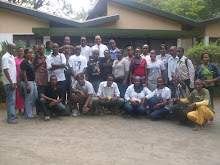
It is a small organization, made of 24 villages, surrounding a 2500km2 a wildlife rich core area distributed in the districts of Mvomero, Morogoro and Bagamoyo. The villages have united to form a community based organization (CBO) called Wami-Mbiki Society, to manage and share the benefits they can accrue from Wildlife in and around their area. It was established as a pilot Wildlife Management area (WMA) in 1997, and it is also titled as Authorized Association (AA) according to the present wildlife conservation policy. WMS carries the slogan of Communities Participation in Natural Resource Management, and it is among more than 16, mostly aid and donor oriented and dependent WMA established as pilot projects to try to implement the wildlife conservation policy of Tanzania of 1998/2007, and perhaps the wildlife conservation act of 2009 which is not yet gazetted.
Wednesday, March 31, 2010

Friday, March 26, 2010
TANZANIANS IN THE AGONY OF GREAT TREASURES
Tanzanians continue to suffer from poverty, despite the blessings of lumpsome treasures of varieties of natural resources they have. According to the recent MWANAHALISI newspaper investigator and reporter, Yusufu Aboud, the presence of Geita Gold Mine is a tragedy to most Geita residents. The residents are said to be no less than the poorest peasants and it is not easy to say that they have ever harvest greens for subsistence. It is difficult to understand that Tanzania is the third country in Africa for Gold production, with minerals produces more than half of the country’s foreign currency.
According to the investigator, the communities around the gold mine are left with highly polluted water, noisy pollution and unpleasant smell and air. The smoke and dust from gold mining accumulates in the water which the people use for drinking, cooking and washing. The report pointed out that the polluted water contain sarcastic or acidic chemical called cyanide which can obliterate even the bones when spilt on the body. The owners of GGM scare away birds that attempt to drink water from the dam that accumulate the chemicals from mining, where by scientists said that even when an animal eat a bird dead from cyanide, that animal dies. However, during dry season the dam with such chemical emits poisonous gas that people and animals inhale. According to Aboud’s report, legs of some people are ruined by the chemical from the dam.
The problems do not end at environmental pollution. The livelihood of the people around the gold mine is frustrating. According to Aboud, Mgusu Primary school which is very nearby the gold mine is very shocking. It is a school with 1204 students but with only four ‘classrooms’ with no desks, such that about 200 students sit in one room, on the floor, while others sit under a tree. About 20 students in the village who passed their primary school examination last year are said to have failed to join their secondary education because their families are suffering from severe poverty.
Similarly, teachers’ life in the school is tedious. The only 11 teachers in the school have to travel by bicycles about 28km from Geita town to school every monday. The school has no chalks, writing board and books. The residents around the gold mine are lacking enough schools, hospitals and clean water supply. Some families' kids in the village are suffering from marasmus and kwashiorkor, while they live in a refugee like camp-life following their eviction from the so called ‘mine mpya’ (new mine) by armed forces collaborated with GGM.
Environmental and social economic problems around natural resource rich areas in Tanzania are not exhaustive. The cases of North Mara have been hitting every corner. Similar problems are common around wildlife protected areas. The recent brutal eviction of Loliondo people cannot be underestimated. Loss of life of people and livestock and crop damage by wildlife is common almost around all wildlife protected areas.
While such problems are persisting, the responsible institutions for environment and natural resource conservation in the country appears to have failed. It is hard to believe institutions like NEMC are alive and Environmental Impact Assessments are being conducted to investments like GGM, and if it is undertaken, the reports are there to decorate the files in the offices. The ministries for Environment, minerals, food security, education, natural resources and the government as whole, is responsible for the blood, sufferings and loss of life of Tanzanians in Natural resource rich areas in the country.
It therefore challenge to CSOs and YETs to make sure that all investments especially in natural resource related areas in the country are environmentally friend and socially acceptable. Any necessary eviction of people and environmental degradation should be compensated based on reliable, acceptable economic analysis. The government and her environmental instruments, should be transparent on the investments, and held accountable when they do contrary to the principles.YETS lets stand up for our people !
According to the investigator, the communities around the gold mine are left with highly polluted water, noisy pollution and unpleasant smell and air. The smoke and dust from gold mining accumulates in the water which the people use for drinking, cooking and washing. The report pointed out that the polluted water contain sarcastic or acidic chemical called cyanide which can obliterate even the bones when spilt on the body. The owners of GGM scare away birds that attempt to drink water from the dam that accumulate the chemicals from mining, where by scientists said that even when an animal eat a bird dead from cyanide, that animal dies. However, during dry season the dam with such chemical emits poisonous gas that people and animals inhale. According to Aboud’s report, legs of some people are ruined by the chemical from the dam.
The problems do not end at environmental pollution. The livelihood of the people around the gold mine is frustrating. According to Aboud, Mgusu Primary school which is very nearby the gold mine is very shocking. It is a school with 1204 students but with only four ‘classrooms’ with no desks, such that about 200 students sit in one room, on the floor, while others sit under a tree. About 20 students in the village who passed their primary school examination last year are said to have failed to join their secondary education because their families are suffering from severe poverty.
Similarly, teachers’ life in the school is tedious. The only 11 teachers in the school have to travel by bicycles about 28km from Geita town to school every monday. The school has no chalks, writing board and books. The residents around the gold mine are lacking enough schools, hospitals and clean water supply. Some families' kids in the village are suffering from marasmus and kwashiorkor, while they live in a refugee like camp-life following their eviction from the so called ‘mine mpya’ (new mine) by armed forces collaborated with GGM.
Environmental and social economic problems around natural resource rich areas in Tanzania are not exhaustive. The cases of North Mara have been hitting every corner. Similar problems are common around wildlife protected areas. The recent brutal eviction of Loliondo people cannot be underestimated. Loss of life of people and livestock and crop damage by wildlife is common almost around all wildlife protected areas.
While such problems are persisting, the responsible institutions for environment and natural resource conservation in the country appears to have failed. It is hard to believe institutions like NEMC are alive and Environmental Impact Assessments are being conducted to investments like GGM, and if it is undertaken, the reports are there to decorate the files in the offices. The ministries for Environment, minerals, food security, education, natural resources and the government as whole, is responsible for the blood, sufferings and loss of life of Tanzanians in Natural resource rich areas in the country.
It therefore challenge to CSOs and YETs to make sure that all investments especially in natural resource related areas in the country are environmentally friend and socially acceptable. Any necessary eviction of people and environmental degradation should be compensated based on reliable, acceptable economic analysis. The government and her environmental instruments, should be transparent on the investments, and held accountable when they do contrary to the principles.YETS lets stand up for our people !
Dead Aid; Who Wants It?
It is estimated that “more than US$ 2 trillions of foreign aid has been transferred to the poor, over the past fifty years” (Moyo D, 2009). Fifty years of massive aid but the recipients are still living in miserable life of severe poverty!! What did such huge amount do, for whom? when and where? It is very unfortunate that, poverty level has been and is still increasing among most aid beneficiaries, more so in Africa.
However, aid has become a beautiful song in most of the political arenas both in developing and developed countries, aid seekers and donors. While donors claim to maintain good diplomatic relationship with poor countries like Tanzania through aid, the aid seeker use it to gain political popularity by arguing that if they are elected they will seek for development aid to assist in poverty alleviation among their people. The most prominent advocates of aid are rich, top politicians, whose salaries come directly from the sweat of majority poor tax payers.
Where does the aid money come from? It is again from the sweat of majority poor tax payers in donor countries. The biggest political claim as to why donors should donate money to poor nations is the need to assist to alleviate poverty. However it has been proved already that the reason as to why many countries of Africa, with vast wealth of natural resources (minerals, forests, wildlife and fisheries among others) are poor is not lack of financial capital. Tanzanian’s poverty for example has been directly linked with lack of efficient government regulation (NPES 1997).
There is no solid framework for legal and social infrastructures, where as the systems of accountability, transparency, and responsiveness in the government are relatively weak, thus, it is not realistic for the government to be able to execute its policies effectively. A major strand in the poor regulation by the Tanzanian government is corruption. All these undermine any effort (if any) to create conditions suitable for poverty eradication and sustainable development. The government is not able to allocate resources efficiently, since it does not act on the immediate needs that are apparent from the private sector, and on the provision of public goods such as healthcare and transport (Gumbo 2007).
What then qualifies such country like Tanzania for aid? To what extent can aid donors and recipients’ governments prove the success of the aid policies in the past years? The reality is that, politicians of developing and most developed countries are enjoying the taxes they collect from their people. What is frustrating in poor countries is that politicians are misusing the tax they collect from their poor majority and extend that behavior to misuse the aid they get, from the pockets of majority in developed countries.
It is therefore true that aid “interferes with development as the money end up in the hand of the few chosen, making it a form of taxing poor in the West to enrich the few elites in the former colonies” (Moyo D, 2009). While donors know this they keep on donating!!! Why? Dambisa Moyo, 2009 went further and addressed aid as a “silent killer” of economic growth in what she called “vicious cycle of aid”. Foreign aid fosters corruption by providing corrupt governments with free cash. These corrupt governments weaken the civil institutions, civil liberties (perhaps including the freedom of YETs 2010 and their host CSOs) and thus making investments unattractive, which causes unemployment and increase poverty level (Moyo D, 2009).
If donors know for sure that aid is not working properly and it increases poverty contrary to their aims, yet they sustain their donation behavior, there must be other reasons than that of poverty reduction assistances. According to Dambisa Moyo, 2009, one of the reasons is that there is always “pressure to lend”. There are about 500,000 people, equivalent to the population of Swaziland, in World Bank, IMF, NGOs (including WWF), private charities, UN agencies and the army of government aid agencies most of them from developed countries all employed to work in aid businesses (grants and loans). Their livelihoods depend entirely on aid (Moyo D, 2009). Donor governments then fear on employments of their people. If they stop donating those employees will lose their jobs, and definitely they will start boycotts and mass demonstrations and weaken the political standing of politicians in their governments and shake the sustainability of their jobs too. However, being employed by aid which is not working as planned, and which increase poverty, it means you’re not working properly and that you are contributing to increase in poverty.
This is to say all donors, employees in aid businesses and governments in the aid recipient countries have contributed (and are still contributing) to the increasing poverty level (vicious cycle of aid) among African countries. Furthermore, there are many highly exploitative big companies and private persons from donor countries with multibillion USD investments in poor countries especially in natural resource rich areas, were the surrounding communities have been and are being devastated by pollution from the projects and severe poverty (Geita Gold mine, North Mara and Loliondo Scams to mention few in Tanzania), due to lack of effective benefit sharing mechanisms. This may has pressured the donors to foster the sustained but failed aid policies!!!
Therefore, those who are directly and indirectly benefiting from aid (top politicians from donors countries, employees in aid businesses and top politicians in recipient countries) are the ones who want and advocate aid but not majority poor tax payers from donors’ countries, or majority poor recipients targeted. What can then CSO's in Tanzania and YETs 2010 (who are direct beneficiaries of aid from Norway’s tax payers through WWF) do, to fight against “vicious cycle” of the “dead aid” and thus alleviate poverty in their country? Can WWF assist to alleviate poverty or nature conservation in the same pool of “vicious cycle of aid”?
Definitely there might be some very few cases where aid works, but those challenges should never be overlooked. All in all we should never give up and work towards want we want to do for our people !
However, aid has become a beautiful song in most of the political arenas both in developing and developed countries, aid seekers and donors. While donors claim to maintain good diplomatic relationship with poor countries like Tanzania through aid, the aid seeker use it to gain political popularity by arguing that if they are elected they will seek for development aid to assist in poverty alleviation among their people. The most prominent advocates of aid are rich, top politicians, whose salaries come directly from the sweat of majority poor tax payers.
Where does the aid money come from? It is again from the sweat of majority poor tax payers in donor countries. The biggest political claim as to why donors should donate money to poor nations is the need to assist to alleviate poverty. However it has been proved already that the reason as to why many countries of Africa, with vast wealth of natural resources (minerals, forests, wildlife and fisheries among others) are poor is not lack of financial capital. Tanzanian’s poverty for example has been directly linked with lack of efficient government regulation (NPES 1997).
There is no solid framework for legal and social infrastructures, where as the systems of accountability, transparency, and responsiveness in the government are relatively weak, thus, it is not realistic for the government to be able to execute its policies effectively. A major strand in the poor regulation by the Tanzanian government is corruption. All these undermine any effort (if any) to create conditions suitable for poverty eradication and sustainable development. The government is not able to allocate resources efficiently, since it does not act on the immediate needs that are apparent from the private sector, and on the provision of public goods such as healthcare and transport (Gumbo 2007).
What then qualifies such country like Tanzania for aid? To what extent can aid donors and recipients’ governments prove the success of the aid policies in the past years? The reality is that, politicians of developing and most developed countries are enjoying the taxes they collect from their people. What is frustrating in poor countries is that politicians are misusing the tax they collect from their poor majority and extend that behavior to misuse the aid they get, from the pockets of majority in developed countries.
It is therefore true that aid “interferes with development as the money end up in the hand of the few chosen, making it a form of taxing poor in the West to enrich the few elites in the former colonies” (Moyo D, 2009). While donors know this they keep on donating!!! Why? Dambisa Moyo, 2009 went further and addressed aid as a “silent killer” of economic growth in what she called “vicious cycle of aid”. Foreign aid fosters corruption by providing corrupt governments with free cash. These corrupt governments weaken the civil institutions, civil liberties (perhaps including the freedom of YETs 2010 and their host CSOs) and thus making investments unattractive, which causes unemployment and increase poverty level (Moyo D, 2009).
If donors know for sure that aid is not working properly and it increases poverty contrary to their aims, yet they sustain their donation behavior, there must be other reasons than that of poverty reduction assistances. According to Dambisa Moyo, 2009, one of the reasons is that there is always “pressure to lend”. There are about 500,000 people, equivalent to the population of Swaziland, in World Bank, IMF, NGOs (including WWF), private charities, UN agencies and the army of government aid agencies most of them from developed countries all employed to work in aid businesses (grants and loans). Their livelihoods depend entirely on aid (Moyo D, 2009). Donor governments then fear on employments of their people. If they stop donating those employees will lose their jobs, and definitely they will start boycotts and mass demonstrations and weaken the political standing of politicians in their governments and shake the sustainability of their jobs too. However, being employed by aid which is not working as planned, and which increase poverty, it means you’re not working properly and that you are contributing to increase in poverty.
This is to say all donors, employees in aid businesses and governments in the aid recipient countries have contributed (and are still contributing) to the increasing poverty level (vicious cycle of aid) among African countries. Furthermore, there are many highly exploitative big companies and private persons from donor countries with multibillion USD investments in poor countries especially in natural resource rich areas, were the surrounding communities have been and are being devastated by pollution from the projects and severe poverty (Geita Gold mine, North Mara and Loliondo Scams to mention few in Tanzania), due to lack of effective benefit sharing mechanisms. This may has pressured the donors to foster the sustained but failed aid policies!!!
Therefore, those who are directly and indirectly benefiting from aid (top politicians from donors countries, employees in aid businesses and top politicians in recipient countries) are the ones who want and advocate aid but not majority poor tax payers from donors’ countries, or majority poor recipients targeted. What can then CSO's in Tanzania and YETs 2010 (who are direct beneficiaries of aid from Norway’s tax payers through WWF) do, to fight against “vicious cycle” of the “dead aid” and thus alleviate poverty in their country? Can WWF assist to alleviate poverty or nature conservation in the same pool of “vicious cycle of aid”?
Definitely there might be some very few cases where aid works, but those challenges should never be overlooked. All in all we should never give up and work towards want we want to do for our people !
The shortcomings of the Constituencies Development Catalyst Fund Act, 2009
Constituency Development Catalyst Funds (CDCFs) is a scheme in which national legislatures allocate public funds to local communities or districts for development projects.
Saturday, March 20, 2010
The survival of our wildlife
The survival of our wildlife is a matter of serous concern to all of us in Tanzania. These wild creatures amid the wild places they inhabit are not only important as a source of wonder and inspiration but are an essential part of our natural resources and our future livelihood and well being.
In accepting the trusteeship of our wildlife we should do everything in our power to make sure that our children’s grand-children will be able to enjoy this rich and precious inheritance.
Conservation in Tanzania is governed by the Wildlife Conservation Act of 1974, which allows the Government to establish protected areas and outlines how these are to be organized and managed. National Parks represent the highest level of resource protection that can be provided.
National Parks retain a high degree of integrity as a true, accurate and unspoiled example of a resource. Management Plans for parks are developed by interdisciplinary teams comprised of appropriate professionals with the best available information to achieve a balance between preservation and use that does not adversely impact park resources and values.
The Legal mandate of Tanzania National Parks is to manage and regulate the use of areas designated as National Parks by such means and measures to preserve the country’s heritage, encompassing natural and cultural resources, both tangible and intangible resource values, including the fauna and flora, wildlife habitat, natural processes, wilderness quality and scenery therein and to provide for human benefit and enjoyment of the same in such manner and by such means as will leave them unimpaired for future generations.
Tourism sector supporting extraordinary investment in the future and Tanzania National Parks (TANAPA) is also currently acquiring further land to expand certain parks. Tourism provides valuable revenue used to support the conservation work of the national parks, as well as wildlife research, and the education and livelihood of local communities.
In addition, tourism helps to generate international awareness of conservation issues, while the physical presence of tourists can help deter illegal poaching activity, assisting the park rangers with their game management work.
It is a right time for our government to work hard to ensure that local communities have a sense of ownership and a vested interest in the future of the parks by sharing the rewards of conservation and delivering tangible benefits.
A percentage of park revenues should be used to assist community development initiatives, such as schools, health dispensaries, water schemes and roads. Villagers should be encouraged to develop cultural tourism projects to cultivate their own financial returns from park visitors. However many locals are employed within the parks as lodges and tour operators.
When villagers depend on the park for employment, and witness the community benefits from the presence of a park, they are more likely to defend the protected area and to report poaching. Poaching involves not only the commercial hunting of elephants and rhinoceroses for ivory and rhino horn, but also subsistence activities such as honey collection, illegal fishing and hunting for the pot, felling trees for construction or firewood, and picking traditional medicinal plants that have become scarce in unprotected areas.
The Ministry of Natural Resources and Tourism through it agencies should work with communities to teach sustainable environmental management, assist with tree planting, establish nurseries, and promote cultural, as well as wildlife conservation.
The Ministry must take lead in educating local people, providing study materials and teacher training for schools, and showing conservation videos in Swahili in villages. Schools and community groups should be offered free visits to the parks to demonstrate the importance of preserving these habitats.
In accepting the trusteeship of our wildlife we should do everything in our power to make sure that our children’s grand-children will be able to enjoy this rich and precious inheritance.
Conservation in Tanzania is governed by the Wildlife Conservation Act of 1974, which allows the Government to establish protected areas and outlines how these are to be organized and managed. National Parks represent the highest level of resource protection that can be provided.
National Parks retain a high degree of integrity as a true, accurate and unspoiled example of a resource. Management Plans for parks are developed by interdisciplinary teams comprised of appropriate professionals with the best available information to achieve a balance between preservation and use that does not adversely impact park resources and values.
The Legal mandate of Tanzania National Parks is to manage and regulate the use of areas designated as National Parks by such means and measures to preserve the country’s heritage, encompassing natural and cultural resources, both tangible and intangible resource values, including the fauna and flora, wildlife habitat, natural processes, wilderness quality and scenery therein and to provide for human benefit and enjoyment of the same in such manner and by such means as will leave them unimpaired for future generations.
Tourism sector supporting extraordinary investment in the future and Tanzania National Parks (TANAPA) is also currently acquiring further land to expand certain parks. Tourism provides valuable revenue used to support the conservation work of the national parks, as well as wildlife research, and the education and livelihood of local communities.
In addition, tourism helps to generate international awareness of conservation issues, while the physical presence of tourists can help deter illegal poaching activity, assisting the park rangers with their game management work.
It is a right time for our government to work hard to ensure that local communities have a sense of ownership and a vested interest in the future of the parks by sharing the rewards of conservation and delivering tangible benefits.
A percentage of park revenues should be used to assist community development initiatives, such as schools, health dispensaries, water schemes and roads. Villagers should be encouraged to develop cultural tourism projects to cultivate their own financial returns from park visitors. However many locals are employed within the parks as lodges and tour operators.
When villagers depend on the park for employment, and witness the community benefits from the presence of a park, they are more likely to defend the protected area and to report poaching. Poaching involves not only the commercial hunting of elephants and rhinoceroses for ivory and rhino horn, but also subsistence activities such as honey collection, illegal fishing and hunting for the pot, felling trees for construction or firewood, and picking traditional medicinal plants that have become scarce in unprotected areas.
The Ministry of Natural Resources and Tourism through it agencies should work with communities to teach sustainable environmental management, assist with tree planting, establish nurseries, and promote cultural, as well as wildlife conservation.
The Ministry must take lead in educating local people, providing study materials and teacher training for schools, and showing conservation videos in Swahili in villages. Schools and community groups should be offered free visits to the parks to demonstrate the importance of preserving these habitats.
Wednesday, March 17, 2010
TANZANIA IS WEALTHY BUT IS POOR
Tanzania is among of wealth countries in the world particularly in natural resources such as minerals, fisheries, forest, fertile soil etc. According to geological survey conducted last year by the ministry of energy and minerals, Tanzania has huge reserves in eleven key minerals include Gold, Nickel, Tanzanite, Diamond, Copper, Iron Ore, Coal, Limestone, Soda ash, Gypsum and Phosphate. So far, only three types of minerals i.e. Gold, diamonds, Tanzanite are being fully mined by multinational companies which at the end of the day take 97%, leaving only peanut to the original Tanzanian owners.
Even though there is wealth of resources but still Tanzania is invaded by poverty because of the following problems:-
Presences of and sectoral planning poor policy in resources utilization. Where by police and planning found does not provide opportunity of utilize it so as to bring sustainable development.
Importation of resources through multination cooperations. Where by resources like minerals, fisheries, forest product are being exported out, its income does not used in country for development.
Poor leadership in resources management, managers particularly ministries does not managed it effectively, they are signing contract of exploiting resources without regarding the future generation.
Presence of corruption, where by corruption in various sectors of natural resources, where by loss of natural resources are taken through illegally by corruption way between managers and those who demanding it.
Lack of environmental education to the local community which cause failure on protection and conservation of natural resources like water, soil, forest, wildlife etc.
Solution toward these problems are:-
Provision of environmental education to the community on how they are needed or responsibility in conservation and preservation of natural resources like forest, water, wildlife etc.
Provision of advocacy and lobbying to the political leaders so as to consider on proper management of resources, this process can be done by environmental trainees,
civil societies, private sectors, towards the government who is the owner of the natural resources.
Making community participation in the resources management as well as in harvesting or manipulation which will allow conservation and management.
Influencing capacity building to the young environmentalists, civil societies organization.
To have good police and plans to wads on conservation and protection of the natural resources.
CONCLUSSION.Therefore,in order to have present and future development government,civil societies organizations, private sectors with cooperation from local community should make sure that resources are used for Tanzania development.
YOUNGEST ENVIRONMENTALIST TRAINEE’S NAME – JABIR SAID
jabirsaid85@yahoo.com
Even though there is wealth of resources but still Tanzania is invaded by poverty because of the following problems:-
Presences of and sectoral planning poor policy in resources utilization. Where by police and planning found does not provide opportunity of utilize it so as to bring sustainable development.
Importation of resources through multination cooperations. Where by resources like minerals, fisheries, forest product are being exported out, its income does not used in country for development.
Poor leadership in resources management, managers particularly ministries does not managed it effectively, they are signing contract of exploiting resources without regarding the future generation.
Presence of corruption, where by corruption in various sectors of natural resources, where by loss of natural resources are taken through illegally by corruption way between managers and those who demanding it.
Lack of environmental education to the local community which cause failure on protection and conservation of natural resources like water, soil, forest, wildlife etc.
Solution toward these problems are:-
Provision of environmental education to the community on how they are needed or responsibility in conservation and preservation of natural resources like forest, water, wildlife etc.
Provision of advocacy and lobbying to the political leaders so as to consider on proper management of resources, this process can be done by environmental trainees,
civil societies, private sectors, towards the government who is the owner of the natural resources.
Making community participation in the resources management as well as in harvesting or manipulation which will allow conservation and management.
Influencing capacity building to the young environmentalists, civil societies organization.
To have good police and plans to wads on conservation and protection of the natural resources.
CONCLUSSION.Therefore,in order to have present and future development government,civil societies organizations, private sectors with cooperation from local community should make sure that resources are used for Tanzania development.
YOUNGEST ENVIRONMENTALIST TRAINEE’S NAME – JABIR SAID
jabirsaid85@yahoo.com
ENVIRONMENTAL IMPACT ASSESSMENT (EIA) IN DIFFERENT LEGISLATION AND
This article intends to raise awareness to the general public and different stakeholders on the importance of EIA before carrying out any project. The article will also provide the historical background of EIA, its importance, different legislation and policies in relation to EIA, procedures involved in EIA and recommendations.
HISTORICAL BACKGROUND OF EIA
Environmental Impact Assessment (EIA) originated in the United States of America when the Congress enacted the National Environmental Policy Act, (NEPA) 1969.The Act contains three main elements, these are; national policy for environment, procedures for realizing the objectives of the Act, establishment of US Council on Environmental Quality (CEQ) to administer the Act[2].NEPA intended each Federal Agency to include in every recommendations and any major actions significantly affecting the quality of the environment, a detailed statement known as EIA.EIA developed as a consequences of increased public awareness of the harmful environmental and social effects of development.
Legislation in respect of environmental protection in Africa began to emerge in early 1980s.The first African country to adopt a framework legislation on environmental management was Libya as 1981 it enacted Act No 7 of 1982 on protection of the environment. Other countries followed including Tanzania that enacted the National Environmental Management Act, No 19 of 1983.Despite the lack of specific environmental protection legislation or EIA legislation, the environment has been protected in Africa, particularly in Tanzania via administrative mechanisms and other pieces of legislation which have some bearing on environment though not exclusively on the environment. Currently we have the framework law which is the Environmental Management Act[3]
CONCEPTUALIZATION OF EIA
EIA means a systematic examination conducted to determine whether or not a programme, activity or project will have adverse impacts on the environment[4].This is a management and planning tool for ensuring that the best alternatives is selected and not to prevent development activities from being carried out. It is a means for integrating harmful environmental impacts caused by human activities.EIA shall be carried out prior to the commencement or financing of the project. The developer of the project is not allowed to carry out the project without the Environmental Impact Assessment License. It is normally issued by the Minister of environment, Vice President Office (VPO) after receiving recommendations from National Environmental Council (NEMC) about the project.
IMPORTANCE/BENEFITS OF EIA
Environmental considerations are always supposed to take an upper hand in EIA processes, though social, cultural and economic considerations can be considered also. Here in below are the importances of EIA:-
Improve future projects design and reduced present cost
Avoidance of unnecessary conflicts
Helps projects and avoid long term problems
Improve sectional or institutional coordination
Considers alternatives projects and designs
Improve accountability and transparency
EIA UNDER DIFFERENT POLICIES
EIA as a tool to determine environmental impacts to any project and also provide mitigating measures to the same has been provided in a number of policies. Here in below are few selected policies:-
National Environmental policy, 1997, it is provided under chapter four paragraphs 63-66 ,generally EIA as a planning tool shall be used to integrate environmental considerations in the decision making process, in order to avoid unnecessary damage to the environment. Environmental considerations will not become an afterthought in planning and decision making but rather part of our consciousness and awareness of our developments realities.
National Forest Policy,1998,it is provided under paragraph 4.3.4 that EIA must therefore be incorporated in the panning and decision making process in order to ensure beforehand that unnecessary damage to the environment is avoided and mitigation measures are identified. Policy statements and directions have been provided for the effectiveness of the same.
The Wildlife Policy of Tanzania, Also provide that EIA has to be carried out before the commencement of any project in wildlife areas. Mwl.Nyerere, the then President of Tanganyika released a statement, the famous “Arusha Manifesto “that
“The survival of our wildlife is a matter of grave concern to all of us in Africa. These wild creatures amid the wild space they inhabit are not only important as a source of wonder and inspiration but are an intergral part of our natural resources and our future livelihood and well being. In accepting the trusteeship of our wildlife we solemnly declare that we will do everything in our power to make sure that our children’s, grandchildren, will be able to enjoy this reach and precious inheritance.
the conservation of wildlife and wild places calls for specialist knowledge trained manpower and money, and we look to other nations to cooperate with this important task the success or failure of which not only affects the continent of Africa but the rest of the world as well”
The above policies and statement by Mwl Nyerere reflect and emphasize the importance of the wildlife conservation and also the importance of environmental considerations in any project before its commencement.
EIA IN DIFFERENT LEGISLATION
A number of legislation provides it mandatory for the carrying out of EIA before the commencement of any project:-
The Environmental Management Act,2004, under part VI section 81 provide that any person who wish to carry our any project shall undertake or cause to be undertaken at his own cost an environmental impact assessment study. This is normally conducted by experts from different fields for the purpose of coming up with comprehensive Environmental Impact Statement (EIS).
The Mining Act,[5] the Act incorporate the concept and need of EIA in many provisions for example Section 38 requires that every applicant for the special mining license to commission and produce to the minister an environmental impact assessment and environmental management plan on the proposed mining operations from independent consultants of international standards. Another part of great interest to EIA process is section 110(2)(h) and (j).Besides, the Minister also issued the Mining Environmental Management and Protection) Regulations 1999 which covers EIA aspects in the mining sector.
PROJECTS WHICH REQUIRES EIA
These are provided under the third schedule of the Environmental Management Act, 2004.Here in below are the projects:-
· urban development,
· transportation,
· dams, rivers and water sources,
· aerial spraying, mining including quarrying and open cast extraction,
· forest related activities,
· agriculture including animal production,
· processing and manufacturing industries,
· electrical infrastructure,
· management of hydrocarbons including the storage of natural gas and combustible or explosive fuels,
· waste disposal,
· natural conservation areas,
· nuclear reactors,
· major development in biotechnology including the introduction and testing of genetically modified organisms,
· any activity out of character with its surrounding, any structure of scale not keeping with its surrounding, major changes in land use,
· any other activity as may be prescribed in the regulations
EIA PROCEDURES
The procedures are provided under the NEMC Guidelines and Procedures. According to the guidelines the EIA involve eight essential steps. These are;-
Ø Registration,
Ø screening,
Ø impact assessment,
· Scoping
· Terms of reference
· Preparation of Environmental Impact Statement(EIS)
Ø review,
Ø implementation,
Ø monitoring,
Ø auditing, and
Ø Decommissioning.
Other details on EIA are provided under the Environmental Management Act, 2004 especially part VI of the Act.
RECOMMENDATIONS
Ø I call upon all project developers to conduct EIA as required by the law before the commencement of the project
Ø YETs’ should educate the people on the importance of EIA for the protection of the environment for sustainable development
Ø National Environmental Management Council(NEMC) should play its role effectively in issues regarding to EIA
Ø Local community should be involved in the process of conducting EIA as required by the law
Ø The Minister for environment, Vice President Office should not just grant EIA certificate basing on recommendations by NEMC but should take personal initiatives to make sure that EIA has been conducted to the standards required and the local community to be affected by the project were involved.
CONCLUSION
In conclusion, EIA is a management and planning tool, therefore it has to be conducted for the projects specified, so as to avoid environmental impacts which will be caused by the project. Mitigating measures should be employed as indicated in order to avoid adverse impacts to the environment. The aim of EIA is to a have sustainable development.
--------------------------------------------------------------------------------
[1] .LL.B (Hons.), SoL-UDSM
[2] Clark, B.D(1980) Environmental Impact Assessment: A Bibliography with Abstracts, Mansell, London, p.7
[3] No 20 of 2004
[4] Section 3,No 20 of 2004
[5] No 5 of 1998
HISTORICAL BACKGROUND OF EIA
Environmental Impact Assessment (EIA) originated in the United States of America when the Congress enacted the National Environmental Policy Act, (NEPA) 1969.The Act contains three main elements, these are; national policy for environment, procedures for realizing the objectives of the Act, establishment of US Council on Environmental Quality (CEQ) to administer the Act[2].NEPA intended each Federal Agency to include in every recommendations and any major actions significantly affecting the quality of the environment, a detailed statement known as EIA.EIA developed as a consequences of increased public awareness of the harmful environmental and social effects of development.
Legislation in respect of environmental protection in Africa began to emerge in early 1980s.The first African country to adopt a framework legislation on environmental management was Libya as 1981 it enacted Act No 7 of 1982 on protection of the environment. Other countries followed including Tanzania that enacted the National Environmental Management Act, No 19 of 1983.Despite the lack of specific environmental protection legislation or EIA legislation, the environment has been protected in Africa, particularly in Tanzania via administrative mechanisms and other pieces of legislation which have some bearing on environment though not exclusively on the environment. Currently we have the framework law which is the Environmental Management Act[3]
CONCEPTUALIZATION OF EIA
EIA means a systematic examination conducted to determine whether or not a programme, activity or project will have adverse impacts on the environment[4].This is a management and planning tool for ensuring that the best alternatives is selected and not to prevent development activities from being carried out. It is a means for integrating harmful environmental impacts caused by human activities.EIA shall be carried out prior to the commencement or financing of the project. The developer of the project is not allowed to carry out the project without the Environmental Impact Assessment License. It is normally issued by the Minister of environment, Vice President Office (VPO) after receiving recommendations from National Environmental Council (NEMC) about the project.
IMPORTANCE/BENEFITS OF EIA
Environmental considerations are always supposed to take an upper hand in EIA processes, though social, cultural and economic considerations can be considered also. Here in below are the importances of EIA:-
Improve future projects design and reduced present cost
Avoidance of unnecessary conflicts
Helps projects and avoid long term problems
Improve sectional or institutional coordination
Considers alternatives projects and designs
Improve accountability and transparency
EIA UNDER DIFFERENT POLICIES
EIA as a tool to determine environmental impacts to any project and also provide mitigating measures to the same has been provided in a number of policies. Here in below are few selected policies:-
National Environmental policy, 1997, it is provided under chapter four paragraphs 63-66 ,generally EIA as a planning tool shall be used to integrate environmental considerations in the decision making process, in order to avoid unnecessary damage to the environment. Environmental considerations will not become an afterthought in planning and decision making but rather part of our consciousness and awareness of our developments realities.
National Forest Policy,1998,it is provided under paragraph 4.3.4 that EIA must therefore be incorporated in the panning and decision making process in order to ensure beforehand that unnecessary damage to the environment is avoided and mitigation measures are identified. Policy statements and directions have been provided for the effectiveness of the same.
The Wildlife Policy of Tanzania, Also provide that EIA has to be carried out before the commencement of any project in wildlife areas. Mwl.Nyerere, the then President of Tanganyika released a statement, the famous “Arusha Manifesto “that
“The survival of our wildlife is a matter of grave concern to all of us in Africa. These wild creatures amid the wild space they inhabit are not only important as a source of wonder and inspiration but are an intergral part of our natural resources and our future livelihood and well being. In accepting the trusteeship of our wildlife we solemnly declare that we will do everything in our power to make sure that our children’s, grandchildren, will be able to enjoy this reach and precious inheritance.
the conservation of wildlife and wild places calls for specialist knowledge trained manpower and money, and we look to other nations to cooperate with this important task the success or failure of which not only affects the continent of Africa but the rest of the world as well”
The above policies and statement by Mwl Nyerere reflect and emphasize the importance of the wildlife conservation and also the importance of environmental considerations in any project before its commencement.
EIA IN DIFFERENT LEGISLATION
A number of legislation provides it mandatory for the carrying out of EIA before the commencement of any project:-
The Environmental Management Act,2004, under part VI section 81 provide that any person who wish to carry our any project shall undertake or cause to be undertaken at his own cost an environmental impact assessment study. This is normally conducted by experts from different fields for the purpose of coming up with comprehensive Environmental Impact Statement (EIS).
The Mining Act,[5] the Act incorporate the concept and need of EIA in many provisions for example Section 38 requires that every applicant for the special mining license to commission and produce to the minister an environmental impact assessment and environmental management plan on the proposed mining operations from independent consultants of international standards. Another part of great interest to EIA process is section 110(2)(h) and (j).Besides, the Minister also issued the Mining Environmental Management and Protection) Regulations 1999 which covers EIA aspects in the mining sector.
PROJECTS WHICH REQUIRES EIA
These are provided under the third schedule of the Environmental Management Act, 2004.Here in below are the projects:-
· urban development,
· transportation,
· dams, rivers and water sources,
· aerial spraying, mining including quarrying and open cast extraction,
· forest related activities,
· agriculture including animal production,
· processing and manufacturing industries,
· electrical infrastructure,
· management of hydrocarbons including the storage of natural gas and combustible or explosive fuels,
· waste disposal,
· natural conservation areas,
· nuclear reactors,
· major development in biotechnology including the introduction and testing of genetically modified organisms,
· any activity out of character with its surrounding, any structure of scale not keeping with its surrounding, major changes in land use,
· any other activity as may be prescribed in the regulations
EIA PROCEDURES
The procedures are provided under the NEMC Guidelines and Procedures. According to the guidelines the EIA involve eight essential steps. These are;-
Ø Registration,
Ø screening,
Ø impact assessment,
· Scoping
· Terms of reference
· Preparation of Environmental Impact Statement(EIS)
Ø review,
Ø implementation,
Ø monitoring,
Ø auditing, and
Ø Decommissioning.
Other details on EIA are provided under the Environmental Management Act, 2004 especially part VI of the Act.
RECOMMENDATIONS
Ø I call upon all project developers to conduct EIA as required by the law before the commencement of the project
Ø YETs’ should educate the people on the importance of EIA for the protection of the environment for sustainable development
Ø National Environmental Management Council(NEMC) should play its role effectively in issues regarding to EIA
Ø Local community should be involved in the process of conducting EIA as required by the law
Ø The Minister for environment, Vice President Office should not just grant EIA certificate basing on recommendations by NEMC but should take personal initiatives to make sure that EIA has been conducted to the standards required and the local community to be affected by the project were involved.
CONCLUSION
In conclusion, EIA is a management and planning tool, therefore it has to be conducted for the projects specified, so as to avoid environmental impacts which will be caused by the project. Mitigating measures should be employed as indicated in order to avoid adverse impacts to the environment. The aim of EIA is to a have sustainable development.
--------------------------------------------------------------------------------
[1] .LL.B (Hons.), SoL-UDSM
[2] Clark, B.D(1980) Environmental Impact Assessment: A Bibliography with Abstracts, Mansell, London, p.7
[3] No 20 of 2004
[4] Section 3,No 20 of 2004
[5] No 5 of 1998
Hello everyone,please find the comments on the articles from Pg 63-67
Does Tanzania really need aids?
The main issues in the articles are embezzlement of donor funds that Tanzania has been received for development activities. It shows that there is mismanagement of funds in major resources activities as the people entitled to such departments are corrupt.
Now the question comes, does Tanzania really need aids if they all end up in the hands of the few? My view is that, there is no need of donor countries to continue providing aids to Tanzania given the fact that only few people benefit and left others in misery.
Aids are intended for development activities and thus donor agencies provide them with strict conditional ties stressing its use for the specific activities.
The country claims to have problems and thus request for aids from other country so that such problems are at least being tackled.
But due to the greediness of some leaders they embezzle the funds that are being disbursed. In that course everyone should ask him/her self if Tanzania does really need aids as the projects are not fully implemented.
CSOs programme can be used as a tool in making sure that they stress on the policies adopted in reserving natural resources by doing some cross checking with the government authorities to see how effective they are.
It is with this regard that CSOs play their role in lowering corruption by announcing in public the dishonest employees who are corrupt rather than protecting them claiming that their cases are crucial or too early to make such people public.
Although one might say that it is not the solution by just making them public but at least they will be known and people will never give them the opportunity to hold any kind of positions that will give them chance to squander the aids.
There should be some sort of secret ways that CSOs can use in doing research to other natural resource agencies in determining the competence of officials employed there.
This is due to the fact that it was shown in the report that some funds were embezzled just because the officials did not know to account for the amount spent. That means they do not know the “a, b c” when it comes to budget expenditure.
In doing that it will reduce the tendency of favoritism in hiring people to areas where they do not belong as they are not competent enough.
The main issues in the articles are embezzlement of donor funds that Tanzania has been received for development activities. It shows that there is mismanagement of funds in major resources activities as the people entitled to such departments are corrupt.
Now the question comes, does Tanzania really need aids if they all end up in the hands of the few? My view is that, there is no need of donor countries to continue providing aids to Tanzania given the fact that only few people benefit and left others in misery.
Aids are intended for development activities and thus donor agencies provide them with strict conditional ties stressing its use for the specific activities.
The country claims to have problems and thus request for aids from other country so that such problems are at least being tackled.
But due to the greediness of some leaders they embezzle the funds that are being disbursed. In that course everyone should ask him/her self if Tanzania does really need aids as the projects are not fully implemented.
CSOs programme can be used as a tool in making sure that they stress on the policies adopted in reserving natural resources by doing some cross checking with the government authorities to see how effective they are.
It is with this regard that CSOs play their role in lowering corruption by announcing in public the dishonest employees who are corrupt rather than protecting them claiming that their cases are crucial or too early to make such people public.
Although one might say that it is not the solution by just making them public but at least they will be known and people will never give them the opportunity to hold any kind of positions that will give them chance to squander the aids.
There should be some sort of secret ways that CSOs can use in doing research to other natural resource agencies in determining the competence of officials employed there.
This is due to the fact that it was shown in the report that some funds were embezzled just because the officials did not know to account for the amount spent. That means they do not know the “a, b c” when it comes to budget expenditure.
In doing that it will reduce the tendency of favoritism in hiring people to areas where they do not belong as they are not competent enough.
KILIMO KWANZA OUTCRY ON ENVIRONMENTAL DEGRADATION
Tanzania National Business Council (TBNC) had a meeting on 2nd and 3rd June, 2009 in Dar es salaam under its chairperson His Excellency President of United Republic of Tanzania Hon. Jakaya Mrisho Kikwete. Among other issues of the meeting the KILIMO KWANZA resolution was passed having the following core 8 pillars Political will to push our agricultural transformation, Enhanced financing for agriculture, Institutional reorganization and management of agriculture, Paradigm shift to strategic agricultural production, Land availability for agriculture, Incentives to stimulate investments in agriculture, Industrialization for agricultural transformation, Science, technology and human resources to support agricultural transformation, Infrastructure Development to support agricultural transformation and Mobilization of Tanzanians to support and participate in the implementation of KILIMO KWANZA.
As young environmentalist, would like to give critical analysis of these pillars, do Business people care about environment in Tanzania? Were there any environmentalist representative in the meeting?. I have been personally in Sumbawanga – Rukwa last year 2009 December, 2nd -6th, for legal aid day. I had an interview with one client who needed legal opinion for the need to have Environmental Impact Assessment to be conducted in an area whereby the Regional Commissioner of Rukwa has decided allocate it to governmental officers in his region so as to implement Kilimo Kwanza. This concerned environmentalist who came for legal aid was assisted accordingly.
Fellow YETS can we share Impacts of KILIMO KWANZA as environmentalist? This is food for thought.
As young environmentalist, would like to give critical analysis of these pillars, do Business people care about environment in Tanzania? Were there any environmentalist representative in the meeting?. I have been personally in Sumbawanga – Rukwa last year 2009 December, 2nd -6th, for legal aid day. I had an interview with one client who needed legal opinion for the need to have Environmental Impact Assessment to be conducted in an area whereby the Regional Commissioner of Rukwa has decided allocate it to governmental officers in his region so as to implement Kilimo Kwanza. This concerned environmentalist who came for legal aid was assisted accordingly.
Fellow YETS can we share Impacts of KILIMO KWANZA as environmentalist? This is food for thought.
GENDER DISTRIBUTION AND RESPONSIBILITIES IN MANAGEMENT OF NATURAL RESOURCES IN RURAL AREAS.
Management of natural resources is a responsibility of all individuals in a society regardless of their age or gender status, in some societies there are still having a wrong perspectives and insight beliefs offered by men on allowing women to participate in some activities like taking a lead in management of natural resources.
Guluka Kwalala youth environmental group is an CSO in gongo la mboto, Dar es salaam which runs a project on good governance in management of natural resources in Kisarawe district, Pwani region, in implementing the project they have been encountering some problems like minimal participation of women. According to the researches done and some interviews with the locals in Kisarawe rural communities , men are not allowing women to participate in these kind of activities because it's against their traditions and culture for women,who are suppose to stay at home taking care of families and manage all household activities.
Women in rural areas are burdened with significant responsibilities important in struggling to provide for their families which makes them to engage in different activities that involves accessibility to natural resources like agricultural activities, searching for firewood in the forests, fetching water from diferent water sources. It is obvious that if we can empower these women who are close to natural resources and create community based gender awareness approach it can help on environmental risks management.
CSO`S and YET`S should examine gender related distribution and responsibilities towards resources management for survival within rural communities. Male individuals in rural areas should be educated on gender awareness and how women activities are environmentally related with management of natural resources, there has to be some improvement in principles of sharing information benefits and increase number of women in decision body like village committees and local leadership. It has been argued that where women hold political offices or have technical expertise they can do well in shaping resources policies.
Guluka Kwalala youth environmental group plays well its role as an CSO to make sure women in rural areas are being educated on their rights in participation on good governance in managing of natural resources, giving them technical knowledge on environmental disasters and hazards.
I call upon other CSO`S and YET’S to build more supportive networking and communication mechanisms of women participation in management of natural resources, create resource mitigation strategies and giving rural communities update information on current environmental trends. We can sustain gender equality in management of natural resources and struggle for more changes and influence positive attitude to the locals that can assure the start of more understanding of allowing to participate in natural resources management.
Guluka Kwalala youth environmental group is an CSO in gongo la mboto, Dar es salaam which runs a project on good governance in management of natural resources in Kisarawe district, Pwani region, in implementing the project they have been encountering some problems like minimal participation of women. According to the researches done and some interviews with the locals in Kisarawe rural communities , men are not allowing women to participate in these kind of activities because it's against their traditions and culture for women,who are suppose to stay at home taking care of families and manage all household activities.
Women in rural areas are burdened with significant responsibilities important in struggling to provide for their families which makes them to engage in different activities that involves accessibility to natural resources like agricultural activities, searching for firewood in the forests, fetching water from diferent water sources. It is obvious that if we can empower these women who are close to natural resources and create community based gender awareness approach it can help on environmental risks management.
CSO`S and YET`S should examine gender related distribution and responsibilities towards resources management for survival within rural communities. Male individuals in rural areas should be educated on gender awareness and how women activities are environmentally related with management of natural resources, there has to be some improvement in principles of sharing information benefits and increase number of women in decision body like village committees and local leadership. It has been argued that where women hold political offices or have technical expertise they can do well in shaping resources policies.
Guluka Kwalala youth environmental group plays well its role as an CSO to make sure women in rural areas are being educated on their rights in participation on good governance in managing of natural resources, giving them technical knowledge on environmental disasters and hazards.
I call upon other CSO`S and YET’S to build more supportive networking and communication mechanisms of women participation in management of natural resources, create resource mitigation strategies and giving rural communities update information on current environmental trends. We can sustain gender equality in management of natural resources and struggle for more changes and influence positive attitude to the locals that can assure the start of more understanding of allowing to participate in natural resources management.
LET’S CHANGE AND PRACTICE SUSTAINABLE UTILIZATION OF NATURAL RESOURCES.
Despite of the fact that Tanzania is among the leading country in possesing different valuable resources , (such as Mineral , Wildlife resources , Forests resources and fisheries) unfortunately we are facing the big challenge of unsustainable utilization of these resources. It is relevant that if this continues we are going to face a serious depletion of our resources for the coming years.The main problem for the unsustainable utilization of the resources perhaps is lack of education and awareness to the local community to practice advanced and modern techniques of utilization of natural resources so as to benefit but in sustainable manner.
This can be proved from recent report of threats on Wamimbiki forest resources caused by the people surrounding the Wami Mbiki forest reserve especially those found along Chalinze Mbwete roads and those between Mikese and Chalinze which supply a bulk amount of charcoal to Dar es salaam and Morogoro regions.The main reason for this is due to the presence of large public lands and abundance of the forest resources with good acces by roads. The fact which relays on the recently statistics from wami mbiki association shows that between 10000-50000 hectares are being degraded from each year due to ineffiency traditional charcoal production technique thus it support the fact of unsustainable utilization of natural resources.The relevancy of this statement is about 12 tonnes of wood are required to produce 1 tonne of charcoal while under improved technique about 7 to 9 tonnes are required to produce the same 1 tonne of charcoal.Thus we need to improve our technologies to improve our utilization of natural resources.
Further, it has been established that the benefits accruing to the community from the charcoal business is very low. Annually the communities get about 1 million TAS while traders in Dares salaam get over 6 million TAS. With an estimated forest area of about 102200 ha presently; the whole forest area will be totally degraded with in about 10 years from now. In case this scenario happens, charcoal dealers will be forced to encroach into the Core area to meet the charcoal demand considering that charcoal and fire wood will continue to be the major source of domestic energy. This situation will threaten the ecological stability of WMA, Sustainable charcoal production strategy is there fore essential to counter the threat.
If this stratergy is applied countrywide will contribute not only the protection of the Wami Mbiki ecosystem and more cash income to the communities through the formation of a charcoal production cooperative which will give more bargaining power in the overall charcoal trade but will benefits the rest of the country for the same.Finally the capacity of the community in tree planting and improved charcoal technology will be improved.
This can be proved from recent report of threats on Wamimbiki forest resources caused by the people surrounding the Wami Mbiki forest reserve especially those found along Chalinze Mbwete roads and those between Mikese and Chalinze which supply a bulk amount of charcoal to Dar es salaam and Morogoro regions.The main reason for this is due to the presence of large public lands and abundance of the forest resources with good acces by roads. The fact which relays on the recently statistics from wami mbiki association shows that between 10000-50000 hectares are being degraded from each year due to ineffiency traditional charcoal production technique thus it support the fact of unsustainable utilization of natural resources.The relevancy of this statement is about 12 tonnes of wood are required to produce 1 tonne of charcoal while under improved technique about 7 to 9 tonnes are required to produce the same 1 tonne of charcoal.Thus we need to improve our technologies to improve our utilization of natural resources.
Further, it has been established that the benefits accruing to the community from the charcoal business is very low. Annually the communities get about 1 million TAS while traders in Dares salaam get over 6 million TAS. With an estimated forest area of about 102200 ha presently; the whole forest area will be totally degraded with in about 10 years from now. In case this scenario happens, charcoal dealers will be forced to encroach into the Core area to meet the charcoal demand considering that charcoal and fire wood will continue to be the major source of domestic energy. This situation will threaten the ecological stability of WMA, Sustainable charcoal production strategy is there fore essential to counter the threat.
If this stratergy is applied countrywide will contribute not only the protection of the Wami Mbiki ecosystem and more cash income to the communities through the formation of a charcoal production cooperative which will give more bargaining power in the overall charcoal trade but will benefits the rest of the country for the same.Finally the capacity of the community in tree planting and improved charcoal technology will be improved.
Wednesday, March 10, 2010
Villagers standing up against illegal fishing activities at Kimbiji ward
In working against the illegal activities along the Indian Ocean which has taken a lead in the villages away from the powers the villagers at Buyuni and Mti Mweupe decided to have a joint power in destroying the illegal activities by forming a cooperative society which will be dealing with patrolling, reporting and conservation of the Indian Ocean Coast. This was achieved by having election to have an administrative team to report to and to disseminate the information to higher authorities.
Buyuni and Mti Mweupe are located in Kimbiji Ward which is 52 km away from the coast of Kigamboni. We started our journey at 9:00am and reach Kimbiji at 10:47am in order to attend the election for Coastal Management Unit of the society at Buyuni and Mti Mweupe which was initiated by Youth Vision of Kigamboni where I am working as an intern. The election was held at the playground of Buyuni Primary School whereby a total of 87 villagers attended. This was not my very first experience for I have been exposed to this kind of activities during my field activities when I was at university; however this proves to be a different scenario to my fellow Jema whom it was her first experience.
At 11:02 AM the election process was officially started, I and the other member from Youth Vision of Kigamboni participated fully in making sure that there was no cheating during the elections in assurance of this took lead in making sure people cast their vote secretly without exposing to their fellows, whereby the villagers also trusted us to count the votes and announce the end results.
During the nomination time all people who raised hands to be running for different posts were men, no female raised up hands, I anticipated this kind of scenario and I raised up my hand and asked the election committee chairperson if I could say two to three words, when he gave me a chance to talk I stood up and urge the ladies to raise up their hands and voices, nominate themselves and encourage them on the benefits of raising up and standing for their own views inspite of letting men to lead them all the time, so they stood up and competed. This proved to be a good start as in a board committee of 20 peoples there were only 8 ladies. We even managed to get a lady in higher position of Chairperson going by the name of Ms. Jiheshimu Mgeni.
This event will remain in my memory as far as I could be able to remember for I was given an honor to announce the final results, and declare the new leaders.Its women and the environmental protection,Ladies keep your heads up !
Joeline Ezekiel
Buyuni and Mti Mweupe are located in Kimbiji Ward which is 52 km away from the coast of Kigamboni. We started our journey at 9:00am and reach Kimbiji at 10:47am in order to attend the election for Coastal Management Unit of the society at Buyuni and Mti Mweupe which was initiated by Youth Vision of Kigamboni where I am working as an intern. The election was held at the playground of Buyuni Primary School whereby a total of 87 villagers attended. This was not my very first experience for I have been exposed to this kind of activities during my field activities when I was at university; however this proves to be a different scenario to my fellow Jema whom it was her first experience.
At 11:02 AM the election process was officially started, I and the other member from Youth Vision of Kigamboni participated fully in making sure that there was no cheating during the elections in assurance of this took lead in making sure people cast their vote secretly without exposing to their fellows, whereby the villagers also trusted us to count the votes and announce the end results.
During the nomination time all people who raised hands to be running for different posts were men, no female raised up hands, I anticipated this kind of scenario and I raised up my hand and asked the election committee chairperson if I could say two to three words, when he gave me a chance to talk I stood up and urge the ladies to raise up their hands and voices, nominate themselves and encourage them on the benefits of raising up and standing for their own views inspite of letting men to lead them all the time, so they stood up and competed. This proved to be a good start as in a board committee of 20 peoples there were only 8 ladies. We even managed to get a lady in higher position of Chairperson going by the name of Ms. Jiheshimu Mgeni.
This event will remain in my memory as far as I could be able to remember for I was given an honor to announce the final results, and declare the new leaders.Its women and the environmental protection,Ladies keep your heads up !
Joeline Ezekiel
YETs Well Represented in the African Environmental Day 2010
Two members of the YET team(Elisaria Samwel and Thabit Jacob) were among the participants who took part in the Annual celebration to mark the Africa Environment Day that is hosted every third day of March and this year Tanzania was honoured to host it in Arusha. This year the day was marked with the theme of African Resilience to Climate Change; Biodiversity Conservation and Enhancing Traditional Knowledge.
Other participants included various ministers from Africa as well as dignitaries from UNEP, UN Habitat, world ecological organisation, diplomats from the EU and representatives of various CSO’s in Tanzania. The event was marked by planting 1000 trees in Naura, a suburb of Arusha and the activity involved primary school students, local leaders and members from civil society organization across the municipality and the country at large.
In her speech, the chief guest Dr Batilda Burian the Minister of State in the Vice President's Office (Environment), explained that this year Africa will put major emphasize on the conservation of our biodiversity and the enhancement of our traditional knowledge in fighting the effects of climate change. She went on to say that if efforts to look after the environment are not intensified there is every likelihood of some fish disappearing because corals that are breeding grounds for these fish are being destroyed and the continual use of illegal fishing nets, deforestation is doing away with certain species of trees, animal life and other organism.
It is important to remember that last year, Africa was hard hit with numerous floods, drought, famine and other environmental catastrophes where Tanzania had its share like the drought in Longido that killed hundreds of livestock, landslides in Same and floods in Kilosa district in Morogoro region that left over 25,000 people homeless
According to a recent report entitled the future of biodiversity in Africa, biodiversity remains the fundamental basis of Africa's development, and determine the well-being of current and future generations.
The YETs contributed in planting the tress and sharing their experience with some of the participants in the event. However, it is worthy to note that, this articles was complied by two YET members who are yet to get a CSO for the internship placement but at least they are doing something on the ground already
Other participants included various ministers from Africa as well as dignitaries from UNEP, UN Habitat, world ecological organisation, diplomats from the EU and representatives of various CSO’s in Tanzania. The event was marked by planting 1000 trees in Naura, a suburb of Arusha and the activity involved primary school students, local leaders and members from civil society organization across the municipality and the country at large.
In her speech, the chief guest Dr Batilda Burian the Minister of State in the Vice President's Office (Environment), explained that this year Africa will put major emphasize on the conservation of our biodiversity and the enhancement of our traditional knowledge in fighting the effects of climate change. She went on to say that if efforts to look after the environment are not intensified there is every likelihood of some fish disappearing because corals that are breeding grounds for these fish are being destroyed and the continual use of illegal fishing nets, deforestation is doing away with certain species of trees, animal life and other organism.
It is important to remember that last year, Africa was hard hit with numerous floods, drought, famine and other environmental catastrophes where Tanzania had its share like the drought in Longido that killed hundreds of livestock, landslides in Same and floods in Kilosa district in Morogoro region that left over 25,000 people homeless
According to a recent report entitled the future of biodiversity in Africa, biodiversity remains the fundamental basis of Africa's development, and determine the well-being of current and future generations.
The YETs contributed in planting the tress and sharing their experience with some of the participants in the event. However, it is worthy to note that, this articles was complied by two YET members who are yet to get a CSO for the internship placement but at least they are doing something on the ground already
Thursday, March 4, 2010
The Tragedy of rich resources and striking poverty in Tanzania!
Tanzania is known for its richness in natural resources, from variety of wildlife, forestry, minerals such as gold, diamond, copper, nickel and Tanzanite and rich coastline. However, it’s shocking that with all the vast wealth, massive poverty continues to rock majority Tanzanians. Though it’s hard to believe but that is the reality in a country where 89% of the total population live under official poverty line. This clearly shows how the government has not always acted in the best interests of many Tanzanians by failing to ensure people’s livelihoods are improved through proper management of these resources
The problem is mainly due to the fact that most the companies involved in both mining and fishing are multinationals and in case of mining, these companies take away 97% of the revenues and the government get the remaining 3% as royalties and taxes. The problem is also due to corruption and greedy nature of our politicians as well as mismanagement and also lack of political will from the state. For instance, tax laws are overly favourable to the multinationals and as a result Tanzania is being plundered of it its rich resources. According to the report by Action Aid International, Canada-based Barick Gold reported a net income of $97 million between 2004 and 2007 but paid no corporate tax to the Tanzanian government.
To government must act urgently to address the situation by doing such things as reviewing of investment laws to ban such things like tax concession which allow the multinationals to avoid corporate tax. I also think if it’s possible the government should abolish 100% foreign ownership in these companies by taking some stake in them. Again the mining law should be amended to ensure that Tanzanians benefit much more from these resources because with all this wealth there is no reason why Tanzanians should remain poor.
Meanwhile, the civil society organizations (CSOs) should forge a strong coalition and lobby the government to ensure that tax laws are amended so as to prevent tax evasion by these companies, to abolish tax concession and VAT exemption. They should also advocate for increase in payment of tax and royalties by at least 40% of the total revenues.
They should also help to bridge the information gap because few Tanzanians are adequately informed about their rights related to natural resources. Few fully understand government roles and responsibilities regarding natural resources. Through education and information dissemination by the CSOs, the public can have a better understand its rights to participate in government decision-making, monitor government performance and demand compliance, and ensure environmental accountability.
CSOs should also send petitions to the parliament to ensure that both mining companies and the government are required b y law to make full public declaration every year, on how much they have paid (companies) and how it has received (government) in terms tax and royalties.
On the on the other hand, young environmentalist trainees should make that they use the acquired knowledge to spearhead the much needed change in natural resources especially on the 3 sub sectors. They should offer their respective organizations full support especially on issues of local community participation to ensure that their concerns are considered before major decisions are taken.
The problem is mainly due to the fact that most the companies involved in both mining and fishing are multinationals and in case of mining, these companies take away 97% of the revenues and the government get the remaining 3% as royalties and taxes. The problem is also due to corruption and greedy nature of our politicians as well as mismanagement and also lack of political will from the state. For instance, tax laws are overly favourable to the multinationals and as a result Tanzania is being plundered of it its rich resources. According to the report by Action Aid International, Canada-based Barick Gold reported a net income of $97 million between 2004 and 2007 but paid no corporate tax to the Tanzanian government.
To government must act urgently to address the situation by doing such things as reviewing of investment laws to ban such things like tax concession which allow the multinationals to avoid corporate tax. I also think if it’s possible the government should abolish 100% foreign ownership in these companies by taking some stake in them. Again the mining law should be amended to ensure that Tanzanians benefit much more from these resources because with all this wealth there is no reason why Tanzanians should remain poor.
Meanwhile, the civil society organizations (CSOs) should forge a strong coalition and lobby the government to ensure that tax laws are amended so as to prevent tax evasion by these companies, to abolish tax concession and VAT exemption. They should also advocate for increase in payment of tax and royalties by at least 40% of the total revenues.
They should also help to bridge the information gap because few Tanzanians are adequately informed about their rights related to natural resources. Few fully understand government roles and responsibilities regarding natural resources. Through education and information dissemination by the CSOs, the public can have a better understand its rights to participate in government decision-making, monitor government performance and demand compliance, and ensure environmental accountability.
CSOs should also send petitions to the parliament to ensure that both mining companies and the government are required b y law to make full public declaration every year, on how much they have paid (companies) and how it has received (government) in terms tax and royalties.
On the on the other hand, young environmentalist trainees should make that they use the acquired knowledge to spearhead the much needed change in natural resources especially on the 3 sub sectors. They should offer their respective organizations full support especially on issues of local community participation to ensure that their concerns are considered before major decisions are taken.
Wednesday, March 3, 2010
TANZANIA AND WELL BEING OF ITS PEOPLE.
Tanzania is an endowed country from the spice groves and palm fringed beaches of Zanzibar to the snow caped of Kilimanjaro and the amazing creater of Ngorongoro, Tanzania has not only the diversity of climatic and geographical zones but has also the cultural variation across the country. Tanzania is also a coastal state gifted with fisheries resources with the present annual fish catch is around 350,000 metric tons.
Tanzania has also about 33.5 million hectares of forests and woodlands where 13 million hectares of this total forest have been gazetted as forest reserves. The forest offers habitat for wildlife, beekeeping and provide unique natural ecosystems with various genetic resources. Tanzania has a rich diversity spectrum of fauna and flora including wide variety of endemic spp and sub-spp.
The wildlife of Tanzania is a unique natural heritage and resource that is of great importance both nationally and globally. Tanzania has 19% of its surface area gazzeted as Protected Areas (National Parks, Game reserves and Game Controlled Areas).
Tanzania’s wealth in terms of minerals according to geological survey conducted in 2009 by the ministry of energy and minerals revealed that there are million of tons of mineral deposits. The five key minerals and their amounts in Gold 2,222 tones, Nickel 209 million tones, Diamonds Carat 50.9 million, Copper 13.65 million tones and Iron ore 103 million tones.
MAJOR PROBLEMS FACING TANZANIA.
Tanzania remains one of the poorest countries in sub-Saharan Africa and face various environmental crisis which results mainly in massive poverty. Thus around less than 30% of people in rural areas have access to safe water and malnutrition have doubled for the last 25 years despite of all the resources found in the country.
This is mainly accounted by little revenue left to the government by multinational companies as only 3% of revenue from mining is for the government while from fisheries is 1.6% - 3.1%. Forest and Wildlife sector contribution to Gross Domestic Product is between 2.3%- 10% of the countries registered export.
Also Poor policy formulation and implementation has also contributed to problems in Tanzania, also abuse of power because some of the government officials are granted with much power on resources. In Wildlife Act of 1998 the Director of Wildlife is given power and authority of allocating hunting quarters to companies something which is not right for proper management of those resources.
However Poor formulated contracts such as the sh200bn deepen fish contract it doesn’t specify how many tones of fish would be harvested according to provisions in the contract. From such kind of situation the Tanzania government is not sure of how much tones of tuna are going to be harvested and how much profit is accrued from it. Thus may be even the 200bn is only a small percent of what Tanzania is required to gain.
SOLUTION TO THE PROBLEM.
Proper policies to ensure such resources are conserved managed and developed on sustainable basis in order to archive the intended national social economic objectives.
The private sector, the community, non governmental organizations and other non state actors have a useful role to play in development, management and sustainable utilization of natural resources. They have diverse experience and expertise and capacity in sector therefore their support is required to archive the sector objectives.
Well framed and focused contracts must be formulated before engaging in any kind of investments in order to avoid the country to be on the loss when comes the profit and revenue accrued from utilization of our natural resources.
Tanzania has also about 33.5 million hectares of forests and woodlands where 13 million hectares of this total forest have been gazetted as forest reserves. The forest offers habitat for wildlife, beekeeping and provide unique natural ecosystems with various genetic resources. Tanzania has a rich diversity spectrum of fauna and flora including wide variety of endemic spp and sub-spp.
The wildlife of Tanzania is a unique natural heritage and resource that is of great importance both nationally and globally. Tanzania has 19% of its surface area gazzeted as Protected Areas (National Parks, Game reserves and Game Controlled Areas).
Tanzania’s wealth in terms of minerals according to geological survey conducted in 2009 by the ministry of energy and minerals revealed that there are million of tons of mineral deposits. The five key minerals and their amounts in Gold 2,222 tones, Nickel 209 million tones, Diamonds Carat 50.9 million, Copper 13.65 million tones and Iron ore 103 million tones.
MAJOR PROBLEMS FACING TANZANIA.
Tanzania remains one of the poorest countries in sub-Saharan Africa and face various environmental crisis which results mainly in massive poverty. Thus around less than 30% of people in rural areas have access to safe water and malnutrition have doubled for the last 25 years despite of all the resources found in the country.
This is mainly accounted by little revenue left to the government by multinational companies as only 3% of revenue from mining is for the government while from fisheries is 1.6% - 3.1%. Forest and Wildlife sector contribution to Gross Domestic Product is between 2.3%- 10% of the countries registered export.
Also Poor policy formulation and implementation has also contributed to problems in Tanzania, also abuse of power because some of the government officials are granted with much power on resources. In Wildlife Act of 1998 the Director of Wildlife is given power and authority of allocating hunting quarters to companies something which is not right for proper management of those resources.
However Poor formulated contracts such as the sh200bn deepen fish contract it doesn’t specify how many tones of fish would be harvested according to provisions in the contract. From such kind of situation the Tanzania government is not sure of how much tones of tuna are going to be harvested and how much profit is accrued from it. Thus may be even the 200bn is only a small percent of what Tanzania is required to gain.
SOLUTION TO THE PROBLEM.
Proper policies to ensure such resources are conserved managed and developed on sustainable basis in order to archive the intended national social economic objectives.
The private sector, the community, non governmental organizations and other non state actors have a useful role to play in development, management and sustainable utilization of natural resources. They have diverse experience and expertise and capacity in sector therefore their support is required to archive the sector objectives.
Well framed and focused contracts must be formulated before engaging in any kind of investments in order to avoid the country to be on the loss when comes the profit and revenue accrued from utilization of our natural resources.
GUIDELINES RULES FOR YETs, 2010
The trainees and trainers do hereby agree that the following rules should regulate and govern them during the whole period of the training. These rules are subject to amendments where the need arise, however there shall be mutual agreement between the two sides before effective amendments of the same.Any developments can be made in the next training in April.
Herein below are the rules:-
It is hereby agreed that time management shall be adhered per the daily programs and assignments shall be delivered before deadline provided.
It is hereby agreed that individual opinions or comments shall be respected by all trainees. This will ensure the freedom of speech.
It is hereby agreed that there shall not be repeations of points spoken by the previous speaker(s) save on point of reference or any reasons as a need may arise.
It is hereby agreed that there shall be gender balance in different programs or discussions.
It is hereby agreed that presentations shall be made on rotational basis among members of the group. Repeation of presenters is only allowed where there is/are strong reason(s) to do so or necessity.
It is hereby agreed that all presenters and group members should prepare themselves with regards to the form and contents of their work, this will help them to present their work with confidence and avoid reading the whole work during presentation.
It is hereby agreed that all inconveniences shall be reported to the elected team leader, whereby the same has to report to the trainers.
It is hereby agreed that there shall be an elected team leader who will link the trainees and trainers in all issues regarding the programs.
It is hereby agreed that an elected team leader shall serve for the whole period of the programs. He/She may be removed from power where the members deem fit to do so before the end of the program. If he/she is absent a temporary team leader will be appointed for that purpose.
It is hereby agreed that there shall not be unnecessary movement during the sessions.
It is hereby agreed that trainers shall employ different techniques, skills and methodologies during the session. This will make the audience to be active during different training sessions.
It is hereby agreed that all members shall adhere to RRR (Reduce, Re-use, and Recycle) principle.
Herein below are the rules:-
It is hereby agreed that time management shall be adhered per the daily programs and assignments shall be delivered before deadline provided.
It is hereby agreed that individual opinions or comments shall be respected by all trainees. This will ensure the freedom of speech.
It is hereby agreed that there shall not be repeations of points spoken by the previous speaker(s) save on point of reference or any reasons as a need may arise.
It is hereby agreed that there shall be gender balance in different programs or discussions.
It is hereby agreed that presentations shall be made on rotational basis among members of the group. Repeation of presenters is only allowed where there is/are strong reason(s) to do so or necessity.
It is hereby agreed that all presenters and group members should prepare themselves with regards to the form and contents of their work, this will help them to present their work with confidence and avoid reading the whole work during presentation.
It is hereby agreed that all inconveniences shall be reported to the elected team leader, whereby the same has to report to the trainers.
It is hereby agreed that there shall be an elected team leader who will link the trainees and trainers in all issues regarding the programs.
It is hereby agreed that an elected team leader shall serve for the whole period of the programs. He/She may be removed from power where the members deem fit to do so before the end of the program. If he/she is absent a temporary team leader will be appointed for that purpose.
It is hereby agreed that there shall not be unnecessary movement during the sessions.
It is hereby agreed that trainers shall employ different techniques, skills and methodologies during the session. This will make the audience to be active during different training sessions.
It is hereby agreed that all members shall adhere to RRR (Reduce, Re-use, and Recycle) principle.
Saturday, February 20, 2010
RICH TANZANIA, POOR TANZANIANS!
As majority Tanzanians amounting to approximately 89% survive on a single meal a day, it has been established that the country is sitting on vast mineral and fishery resources. Reports from the Ministry of Energy and Minerals on a Geological Survey conducted way back in 2007 reveal that, Tanzania is extraordinarily blessed with huge deposits of precious minerals ranging from 2,222 Tonnes of Gold, 209 Mil. Tones of Nickel, 50.9 Mil. Carats of Diamond, 13.65 Mil. Tones of Copper, 103 Mil. Tones Iron, Tanzanite, coal, limestone, Soda ash, Gypsum, Phosphate and many others at a 70% accuracy of actual availability. Moreover, It has further been confirmed by Dr. John Magufuli the Minister for Livestock and Fisheries that Tanzania will now receive increased revenue from Fishing as his ministry have signed a contract with a Japanese company (JTCA) that will pay the government over 200 Bil. Tanzanian Shillings every year in Taxes and fees as more fishing companies are expected to come.
Despite the above vast and varied natural resources, Tanzania which, as of 2008 statistics has more than 39 Mil. People living below a dollar a day will remains swimming in the abyss of abject poverty if relevant attention and safeguard is not taken. It has further been put to the know that, Tanzania’s mineral wealth just like in other African countries has not been used to foster development but rather to ravage peoples’ lives.
Critically several issues can be raised as the major problems that play a key role in obstructing development by the majority fueled by mineral and fisheries’ wealth amongst other resources. Such include; corruption amongst government officials, international piracy in the form of illegal fishing in EEZs, greedy for quick wealth by unpatriotic business person, poor governance of resources emanating from institutional incapacity and unequal distribution of revenue from natural resources to local communities among others.
Several solutions to the current state have been advanced and such include; strict observance of the law and its amendment in case of loop holes, entering into win-win natural resource exploitation contracts and reviewing those already in place, adoption of people centered and problem driven policies and proper, transparent and participatory management of mineral and fisheries management. Joint security measures have proved a good start as they recently saved hundreds of illegally harvested Tuna from the Tanzanian EEZ after a joint security exercise involving Kenyans, Tanzanians and South Africans.
The above suggested solutions can only be adopted if pressure for their adoption will be put upon the government. This is therefore a perfect area for CSO’s to take a role and ensure integrity in natural resources management and exploitation. YET participants and their attached organizations should therefore take a lead in this in mobilizing and sensitizing other CSO’s to take necessary action before further and irreversible damage is done.
Despite the above vast and varied natural resources, Tanzania which, as of 2008 statistics has more than 39 Mil. People living below a dollar a day will remains swimming in the abyss of abject poverty if relevant attention and safeguard is not taken. It has further been put to the know that, Tanzania’s mineral wealth just like in other African countries has not been used to foster development but rather to ravage peoples’ lives.
Critically several issues can be raised as the major problems that play a key role in obstructing development by the majority fueled by mineral and fisheries’ wealth amongst other resources. Such include; corruption amongst government officials, international piracy in the form of illegal fishing in EEZs, greedy for quick wealth by unpatriotic business person, poor governance of resources emanating from institutional incapacity and unequal distribution of revenue from natural resources to local communities among others.
Several solutions to the current state have been advanced and such include; strict observance of the law and its amendment in case of loop holes, entering into win-win natural resource exploitation contracts and reviewing those already in place, adoption of people centered and problem driven policies and proper, transparent and participatory management of mineral and fisheries management. Joint security measures have proved a good start as they recently saved hundreds of illegally harvested Tuna from the Tanzanian EEZ after a joint security exercise involving Kenyans, Tanzanians and South Africans.
The above suggested solutions can only be adopted if pressure for their adoption will be put upon the government. This is therefore a perfect area for CSO’s to take a role and ensure integrity in natural resources management and exploitation. YET participants and their attached organizations should therefore take a lead in this in mobilizing and sensitizing other CSO’s to take necessary action before further and irreversible damage is done.
Tuesday, February 16, 2010
Tanzania’s shocking vast wealth
Name Magreth U. Makinge.
Tanzania is a beautiful country, blessed and richest with natural resources including water bodies like Indian ocean, rivers , lakes like lake Victoria, lake Tanganyika, forests, also game reserves and national parks such as Serengeti National Park, Ngorongoro conservation area.
Tanzania also has mineral deposit including gold, nickel, Tanzanite, diamonds, copper, iron ore, coal, limestone, soda ash, gypsum and phosphate. Gold, diamonds and Tanzanite are being fully mine by multinational companies.
Despite having all this resources, Tanzanians lives in extreme poverty which is below a dollar per day while 89% of the total population survives on a single meal per day.
In reflecting the two articles one on Tanzania’s shocking vast wealth which is about mining sector and the second one is about Magufuli lands Tsh. 200bn deeper fishing contract the following are the challenges/problems.
Poor mining policies which benefits the multinational companies but not Tanzanians, that the government get just 3% of the production and 97% goes to the foreign investor.
The Tanzania government has failed to manage its natural resources this cause the massive increase of poverty level within the country.
Poor negotiating mechanism on the party of our leaders, that the mining contract and license are not well negotiated by the government, as they are after their own interest and not after the interest of majority Tanzanians.
CSOs can contribute the following;
It is important now for CSOs to strengthen their capacities and create awareness to the communities around over the proper management of natural resources and lobbying the government to amend and change some of the policies which lead to unequal distribution and emphasize sustainable natural resource management.
To form coalition so as to have power as CSOs all together, this will enable CSOs to increase their ability in works and strengthened the capacity of CSOs to create awareness on natural resources.
YETS can contribute the following;
YETS 2008- 2012 should form an Association that will work irrespective of the CSOs in promoting awareness through projects during trainings and advocacy on potential natural resources the country has.
Last YETS should act as agent of changing agency.
Email:upendomak@yahoo.com
Tanzania is a beautiful country, blessed and richest with natural resources including water bodies like Indian ocean, rivers , lakes like lake Victoria, lake Tanganyika, forests, also game reserves and national parks such as Serengeti National Park, Ngorongoro conservation area.
Tanzania also has mineral deposit including gold, nickel, Tanzanite, diamonds, copper, iron ore, coal, limestone, soda ash, gypsum and phosphate. Gold, diamonds and Tanzanite are being fully mine by multinational companies.
Despite having all this resources, Tanzanians lives in extreme poverty which is below a dollar per day while 89% of the total population survives on a single meal per day.
In reflecting the two articles one on Tanzania’s shocking vast wealth which is about mining sector and the second one is about Magufuli lands Tsh. 200bn deeper fishing contract the following are the challenges/problems.
Poor mining policies which benefits the multinational companies but not Tanzanians, that the government get just 3% of the production and 97% goes to the foreign investor.
The Tanzania government has failed to manage its natural resources this cause the massive increase of poverty level within the country.
Poor negotiating mechanism on the party of our leaders, that the mining contract and license are not well negotiated by the government, as they are after their own interest and not after the interest of majority Tanzanians.
CSOs can contribute the following;
It is important now for CSOs to strengthen their capacities and create awareness to the communities around over the proper management of natural resources and lobbying the government to amend and change some of the policies which lead to unequal distribution and emphasize sustainable natural resource management.
To form coalition so as to have power as CSOs all together, this will enable CSOs to increase their ability in works and strengthened the capacity of CSOs to create awareness on natural resources.
YETS can contribute the following;
YETS 2008- 2012 should form an Association that will work irrespective of the CSOs in promoting awareness through projects during trainings and advocacy on potential natural resources the country has.
Last YETS should act as agent of changing agency.
Email:upendomak@yahoo.com
Beautiful Tanzania
By: Lilian Mwanga – YETS 2010
Tanzania is so beautiful and God bless it with a lot of valuable resources which cover a large part of he country, such as five key minerals are found in the country. For example gold (2,222 tones) nickel (209 million tones), diamonds (50.9 million tones), copper (13.65 million tones) and iron ore(103million tones) but it’s wonder the country known as poor whole over the world this is due to the fact that massive poverty continues to rock the majority of Tanzanians.
The issue is why are we poor despite of having all these huge deposits? It is a big shame of having something and don’t use it, this is what happening in the country. Local people have not access of their resources. Policy makers and politicians know all these and other evils which happen in the country but still they are quite.
The main problems are as follow.
Poor policies of minerals and investment, the truth is policy makers are making conducive environment for investors that’s why local people are still suffering despite of all wealth found in the country. The policies of minerals and investment favor much foreigners and this is proved whereby 97% of annual revenue from minerals are taken away, and only 3% remain in the country. In this situation why don’t we be poor?
Another problem is concerning weakness of CSOs. CSOs are not capable to attack various issues which bring the country to the massive poverty. Due to their incapability, CSOs are not well involved in decision making concerning various contracts which are signing everyday. Also there is no participation at the grass root level, people are not informed and involved in various issues concerning their wealth.
Suggested solutions;
Civil Society Organisation should be strengthened their capacity through various means such as drawing provision, due to this would give them chance to stand and advocate various sectors also would rise awareness to the community.
All CSO’s should form strong coalition and start campaigning against those evils which bring the country to the desert to create and rise awareness to the people. Also should lobby the government to review and change policies as well as contracts concerning minerals and fishery sector.
YETS should real be a good example by being agent of change, we should use properly those skills and knowledge which we acquire in the program and share with others to the benefit of the community. We should not be quiet when we see our environment are used to benefit foreigners, let stand as one and speak out by giving our views, opinions concerning the issues in order to influence changes in the country.
go_85lilian@yahoo.co.uk
Tanzania is so beautiful and God bless it with a lot of valuable resources which cover a large part of he country, such as five key minerals are found in the country. For example gold (2,222 tones) nickel (209 million tones), diamonds (50.9 million tones), copper (13.65 million tones) and iron ore(103million tones) but it’s wonder the country known as poor whole over the world this is due to the fact that massive poverty continues to rock the majority of Tanzanians.
The issue is why are we poor despite of having all these huge deposits? It is a big shame of having something and don’t use it, this is what happening in the country. Local people have not access of their resources. Policy makers and politicians know all these and other evils which happen in the country but still they are quite.
The main problems are as follow.
Poor policies of minerals and investment, the truth is policy makers are making conducive environment for investors that’s why local people are still suffering despite of all wealth found in the country. The policies of minerals and investment favor much foreigners and this is proved whereby 97% of annual revenue from minerals are taken away, and only 3% remain in the country. In this situation why don’t we be poor?
Another problem is concerning weakness of CSOs. CSOs are not capable to attack various issues which bring the country to the massive poverty. Due to their incapability, CSOs are not well involved in decision making concerning various contracts which are signing everyday. Also there is no participation at the grass root level, people are not informed and involved in various issues concerning their wealth.
Suggested solutions;
Civil Society Organisation should be strengthened their capacity through various means such as drawing provision, due to this would give them chance to stand and advocate various sectors also would rise awareness to the community.
All CSO’s should form strong coalition and start campaigning against those evils which bring the country to the desert to create and rise awareness to the people. Also should lobby the government to review and change policies as well as contracts concerning minerals and fishery sector.
YETS should real be a good example by being agent of change, we should use properly those skills and knowledge which we acquire in the program and share with others to the benefit of the community. We should not be quiet when we see our environment are used to benefit foreigners, let stand as one and speak out by giving our views, opinions concerning the issues in order to influence changes in the country.
go_85lilian@yahoo.co.uk
Wednesday, January 13, 2010
Kenya wants Tanzania denied Cites permission on sale of elephant tusks
Kenya has vowed to fight “to the last man’ to block Tanzania from getting a CITES permit to dispose off its 89,848 kgs of elephant tusks stockpiled in godowns, Kenyan blogers have said, quoting a business newspaper in Nairobi.
The blogers, DirectWildlife, apparently associated with issues of protection of the environment, say a report in one of Kenya’s business newspapers have revealed a fallout between the two countries in the East African Community.
The fallout is in light of the two neighbouring states holding opposing views on ivory trade proposals sent to convention ahead of the 15th Conference of the CITES Parties (CoP15) to be held in Doha, Qatar in March.
While Kenya has submitted a proposal for a total ban on ivory trade, Tanzania is reportedly “pushing for a new trading window to allow it to sell its ivory stockpile to fund conservation measures,” said the Kenya’s Business Daily.
Kenyan wildlife officials see this as betrayal by their neighbours with whom they share ecosystems such as Amboseli (Kilimanjaro) and Maasai Mara (Serengeti). Further Kenya believes that Tanzania’s proposal to move their elephants from Appendix I to Appendix II in the CITES rankings, thus allowing it to carry out a one off trade stockpiled ivory, will most likely increase poaching in the named ecosystems.
Tanzania and Zambia are both pushing for an opportunity to sell 89,848 kgs and 21,692 kgs of stockpiled ivory respectively. Zambia also wants to sell raw hides.
This is confirmation that CITES ruling that allowed four southern Africa nations (Zimbabwe, Namibia, South Africa and Botswana) after the 14th CITES meeting in 2008 was bound to set a bad precedent.
Allowing Tanzania and Zambia to sell their ivory will signal other African states to ask CITES for permission to sell their legally held ivory stockpiles too, thus setting the pattern of bad decisions into a spiral, the paper said.
The result will no doubt be a rise in demand and consequently an upsurge in poaching - possibly to the 1970s and 1980s levels that saw the population of elephants in Kenya cut down from 168,000 in 1969 to just 16,000 in 1989, the paper said.
According to the paper, Kenyan officials have vowed to fight these proposals to the last man. Rallying behind Kenya in the fight to block the Tanzania/Zambia proposal are various African states including Congo, Ghana, Liberia, Mali, Rwanda and Sierra Leone. It would be untold victory for elephants should the pro-trade proposals be voted out and a total ban in all ivory trade is imposed.
The paper further said “So to CITES - and to our Tanzanian neighbours - don’t condemn Africa’s elephants to extinction over a few million dollars worth of ivory”.
There are only two certified buyers. That is Japan and China. Japan designated as a trading partner at the 54th sitting committee meeting (Geneva, October 2006), and China designated as a trading partner at the 57th meeting (SC57, Geneva, July 2008).
Tourism and Natural Resources minister Shamsa Mwangunga was not easily available for comment yesterday as she was reportedly wrapped up in a meeting.
source;THE GUARDIAN
http://ippmedia.com/frontend/functions/print_article.php?l=12396
The blogers, DirectWildlife, apparently associated with issues of protection of the environment, say a report in one of Kenya’s business newspapers have revealed a fallout between the two countries in the East African Community.
The fallout is in light of the two neighbouring states holding opposing views on ivory trade proposals sent to convention ahead of the 15th Conference of the CITES Parties (CoP15) to be held in Doha, Qatar in March.
While Kenya has submitted a proposal for a total ban on ivory trade, Tanzania is reportedly “pushing for a new trading window to allow it to sell its ivory stockpile to fund conservation measures,” said the Kenya’s Business Daily.
Kenyan wildlife officials see this as betrayal by their neighbours with whom they share ecosystems such as Amboseli (Kilimanjaro) and Maasai Mara (Serengeti). Further Kenya believes that Tanzania’s proposal to move their elephants from Appendix I to Appendix II in the CITES rankings, thus allowing it to carry out a one off trade stockpiled ivory, will most likely increase poaching in the named ecosystems.
Tanzania and Zambia are both pushing for an opportunity to sell 89,848 kgs and 21,692 kgs of stockpiled ivory respectively. Zambia also wants to sell raw hides.
This is confirmation that CITES ruling that allowed four southern Africa nations (Zimbabwe, Namibia, South Africa and Botswana) after the 14th CITES meeting in 2008 was bound to set a bad precedent.
Allowing Tanzania and Zambia to sell their ivory will signal other African states to ask CITES for permission to sell their legally held ivory stockpiles too, thus setting the pattern of bad decisions into a spiral, the paper said.
The result will no doubt be a rise in demand and consequently an upsurge in poaching - possibly to the 1970s and 1980s levels that saw the population of elephants in Kenya cut down from 168,000 in 1969 to just 16,000 in 1989, the paper said.
According to the paper, Kenyan officials have vowed to fight these proposals to the last man. Rallying behind Kenya in the fight to block the Tanzania/Zambia proposal are various African states including Congo, Ghana, Liberia, Mali, Rwanda and Sierra Leone. It would be untold victory for elephants should the pro-trade proposals be voted out and a total ban in all ivory trade is imposed.
The paper further said “So to CITES - and to our Tanzanian neighbours - don’t condemn Africa’s elephants to extinction over a few million dollars worth of ivory”.
There are only two certified buyers. That is Japan and China. Japan designated as a trading partner at the 54th sitting committee meeting (Geneva, October 2006), and China designated as a trading partner at the 57th meeting (SC57, Geneva, July 2008).
Tourism and Natural Resources minister Shamsa Mwangunga was not easily available for comment yesterday as she was reportedly wrapped up in a meeting.
source;THE GUARDIAN
http://ippmedia.com/frontend/functions/print_article.php?l=12396
Subscribe to:
Posts (Atom)