It is no longer debated that the world climate is still changing fast and is the most pressing issues of this generation, which cause different impacts on human beings as well as its surroundings. Increasing regional concentrations of aerosol particulates and massive consumption of carbon reservoirs which produce green house gases emissions particularly carbon dioxide in the atmosphere have been identified as the key sources of climate change happening today all over the world.
Friday, May 28, 2010

The Setbacks and Truths of Dambisa Moyo:
The Setbacks and Truths of Dambisa Moyo:
This article tends to summarize the patriotic initiative of a Zambian lady Dambisa Moyo to her lovely continent through her benevolent work addressing issue of aid dependency in Africa. She is one among of the African writers who criticize the western aid programme to Africa. Dambisa posed out strategic ways on how to find sustainable solutions to African woes. With reference to her economic expertise background, Dambisa tends to disguise her self as helper to African economy problem, as she said to her most person request is to find the economic growth of Africa which has until now remained elusive. In collaboration with Nial Furgson, they come up with a book entitled “Dead Aid” with the quotation why aid is not working in Africa and how there is another way for Africa. Her book is very special for those who truly wish to see African progress (Africans, policy makers and western broader international community). To me her enormous work makes me believing that, we Africans youth composes a huge pool of talent and energy that is not fully exploited, given an opportunity we can be an important driver of changes. It is a very important dedicative patriotic initiative to her beloved continent. But is that true? Does aid work? That is the main conspiracy factors drive me to analyze the setbacks and truth of her work.
This article tends to summarize the patriotic initiative of a Zambian lady Dambisa Moyo to her lovely continent through her benevolent work addressing issue of aid dependency in Africa. She is one among of the African writers who criticize the western aid programme to Africa. Dambisa posed out strategic ways on how to find sustainable solutions to African woes. With reference to her economic expertise background, Dambisa tends to disguise her self as helper to African economy problem, as she said to her most person request is to find the economic growth of Africa which has until now remained elusive. In collaboration with Nial Furgson, they come up with a book entitled “Dead Aid” with the quotation why aid is not working in Africa and how there is another way for Africa. Her book is very special for those who truly wish to see African progress (Africans, policy makers and western broader international community). To me her enormous work makes me believing that, we Africans youth composes a huge pool of talent and energy that is not fully exploited, given an opportunity we can be an important driver of changes. It is a very important dedicative patriotic initiative to her beloved continent. But is that true? Does aid work? That is the main conspiracy factors drive me to analyze the setbacks and truth of her work.
Wednesday, May 19, 2010
Lake Victoria: A sick giant
Lake Victoria was 'discovered' in 1858 by the British explorer John Speke, after months of braving dense forests and tropical diseases in his search for the source of the Nile. But now the Lake is in poor health, and the livelihood of the communities round it is threat-ened. Nancy Chege, of the Worldwatch Institute, explains what has caused the trouble and what can be done to save the Lake. If he could see Lake Victoria today, John Speke would probably stare in shock and disbelief. The once clear, life-filled lake is murky, smelly, and choking with algae.
Exotic wildlife trade leaves forests silent
Countries across Southeast Asia are being systematically drained of wildlife to meet a booming demand for exotic pets in Europe and Japan and traditional medicine in China - posing a greater threat to many species than habitat loss or global warming.
More than 35 million animals were legally exported from the region over the past decade, according to official figures, and hundreds of millions more could have been taken illegally.
Almost half of those traded were seahorses and more than 17 million were reptiles. About one million birds and 400,000 mammals were sold, and 18 million pieces of coral.
The situation is so serious that experts have invented a new term - empty forest syndrome - to describe the gaping holes in biodiversity left behind."There's lots of forest where there are no big animals left," says Chris Shepherd of Traffic, the wildlife trade monitoring network.
"There are some forests where you don't even hear birds."Seahorses, butterflies, turtles, lizards, snakes, macaques, birds and corals are among the most common species exported from countries such as Malaysia, Indonesia and Vietnam.
Much of the business is controlled by criminal gangs, Shepherd says, and many of the animals end up in Europe as pets. The rarer the species, the greater the demand and the higher the price.
Collectors will happily pay several thousand pounds for a single live turtle.
Vincent Nijman, a researcher at Oxford Brookes University in England, who has investigated the trade, said: "We see species that are in fashion traded in great numbers until they are wiped out and people can't get them any more. So another one comes in, and then that is wiped out, and then another ..."
"In Asia, everybody knows the value of wildlife, so people go into the forest and, whatever they encounter, they know it has a value and that there is someone they can sell it to."
Nijman's research offers the first glimpse of the size of this widespread trade. While most people know of illegal sales of rhino horn and ivory, it's the scale of the movement of lesser-known species that is most disturbing.
He analysed 53,000 records of imports and exports from countries under Cites, the international convention that regulates the sale of wildlife.
Read this facts,Think,rethink and think again because its happening there today and tommorow its going to be here,YETS put your senses at work for the benefit of our nation !
By Mary Ngazi
More than 35 million animals were legally exported from the region over the past decade, according to official figures, and hundreds of millions more could have been taken illegally.
Almost half of those traded were seahorses and more than 17 million were reptiles. About one million birds and 400,000 mammals were sold, and 18 million pieces of coral.
The situation is so serious that experts have invented a new term - empty forest syndrome - to describe the gaping holes in biodiversity left behind."There's lots of forest where there are no big animals left," says Chris Shepherd of Traffic, the wildlife trade monitoring network.
"There are some forests where you don't even hear birds."Seahorses, butterflies, turtles, lizards, snakes, macaques, birds and corals are among the most common species exported from countries such as Malaysia, Indonesia and Vietnam.
Much of the business is controlled by criminal gangs, Shepherd says, and many of the animals end up in Europe as pets. The rarer the species, the greater the demand and the higher the price.
Collectors will happily pay several thousand pounds for a single live turtle.
Vincent Nijman, a researcher at Oxford Brookes University in England, who has investigated the trade, said: "We see species that are in fashion traded in great numbers until they are wiped out and people can't get them any more. So another one comes in, and then that is wiped out, and then another ..."
"In Asia, everybody knows the value of wildlife, so people go into the forest and, whatever they encounter, they know it has a value and that there is someone they can sell it to."
Nijman's research offers the first glimpse of the size of this widespread trade. While most people know of illegal sales of rhino horn and ivory, it's the scale of the movement of lesser-known species that is most disturbing.
He analysed 53,000 records of imports and exports from countries under Cites, the international convention that regulates the sale of wildlife.
Read this facts,Think,rethink and think again because its happening there today and tommorow its going to be here,YETS put your senses at work for the benefit of our nation !
By Mary Ngazi
Tuesday, May 11, 2010
LEARNING IN LIFE IS AN ENDLESS PROCESS
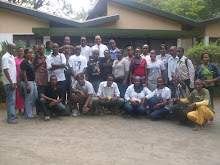
YOUNG ENVIRONMENTALIST TRAINEE {YET} had their second module II training in Arusha at MS TCDC {Danish}. The training took ten days, where by the Young Environmentalist Trainees were able to learn many things that are important like community mobilization, communication tools, speech preparation and presentations and writing articles. While we were in the training we also had a field visit in Ngarenaro Ward. The YETs visited a SET LIFE Environmental group which is found in the ward.
SET LIFE Environmental group is a Voluntary group which was established in 2009 with eleven founding members two of them being women and the rest are men.
The group was established with aim of protecting and conserving Environment at the ward. Their works includes cleaning areas around the river, collecting wastes from households, planting trees around the river and along the road.
The group has been operating for just one year yet it has managed to do a lot on Environmental cleaning activities at Ngarenaro ward. The SET LIFE group has ensured that the areas along the river are always clean by removing garbage and making sure people are not disposing wastes at the river and also planting trees, this is made sure by working at the river three days a week.
The SET LIFE group is facing various challenges like the shortage of working facilities, shortage of funds, poor enforcement of laws, pollution from waste disposal and waste water disposal to the river, destructive animals {destroying planted trees}. Despite these challenges they have managed to move forward and has made a continous effort to make the area along Ngarenaro river and the surrounding areas clean.
The field visit was very important since YET were able to learn the following lessons:
The importance of self commitment; in any work one does he she needs to be self committed. Taking example from the SET LIFE group that has been operating just for one life year but the work done by the group worth done for almost five years due to their self commitment.
Volunteerism; Changes can be brought up by few people who are willing and committed rather than a big group which is not willing. Taking example from the group we visited in Ngarenaro despite the ward having many residents the group has only eleven members but they have done a lot of work in the ward like planting trees, cleaning the areas around the river as well as collecting garbage from households.
The other thing that we learned was to make the most out of the little thing you have rather than thinking of doing the most out of something that you do not have. Like the group we visited, despite having few facilities hoes, spade and a wheelbarrow they have managed to do a lot of works.
Further more we learned that if you want to be helped you need to help yourself; this means you should have something and then other people can just add to what you have.
Finally; despite the challenges that the group is facing it has managed to make the areas surrounding the river to be clean. This teaches us that, challenges are there to make us learn and move forward and not to make us fallback or down.
By Aselina Mwenda
SET LIFE Environmental group is a Voluntary group which was established in 2009 with eleven founding members two of them being women and the rest are men.
The group was established with aim of protecting and conserving Environment at the ward. Their works includes cleaning areas around the river, collecting wastes from households, planting trees around the river and along the road.
The group has been operating for just one year yet it has managed to do a lot on Environmental cleaning activities at Ngarenaro ward. The SET LIFE group has ensured that the areas along the river are always clean by removing garbage and making sure people are not disposing wastes at the river and also planting trees, this is made sure by working at the river three days a week.
The SET LIFE group is facing various challenges like the shortage of working facilities, shortage of funds, poor enforcement of laws, pollution from waste disposal and waste water disposal to the river, destructive animals {destroying planted trees}. Despite these challenges they have managed to move forward and has made a continous effort to make the area along Ngarenaro river and the surrounding areas clean.
The field visit was very important since YET were able to learn the following lessons:
The importance of self commitment; in any work one does he she needs to be self committed. Taking example from the SET LIFE group that has been operating just for one life year but the work done by the group worth done for almost five years due to their self commitment.
Volunteerism; Changes can be brought up by few people who are willing and committed rather than a big group which is not willing. Taking example from the group we visited in Ngarenaro despite the ward having many residents the group has only eleven members but they have done a lot of work in the ward like planting trees, cleaning the areas around the river as well as collecting garbage from households.
The other thing that we learned was to make the most out of the little thing you have rather than thinking of doing the most out of something that you do not have. Like the group we visited, despite having few facilities hoes, spade and a wheelbarrow they have managed to do a lot of works.
Further more we learned that if you want to be helped you need to help yourself; this means you should have something and then other people can just add to what you have.
Finally; despite the challenges that the group is facing it has managed to make the areas surrounding the river to be clean. This teaches us that, challenges are there to make us learn and move forward and not to make us fallback or down.
By Aselina Mwenda
Wednesday, May 5, 2010
Young Environmental Activists in Tanzania on video
- We have to do something. There is time for change! This message is strong and clear from the Young Environmental Trainees – the YETs - who participate in the programme WWF and around 50 partners are running in Tanzania. Young environmentalists are trained to become environmental activists and educators at the local level.
View the video here: http://www.youtube.com/watch?v=JmhYm2nMTj4
The YETs are involved in a 10 month educational program on governance of natural resources in Tanzania, run by WWF and cooperating Civil Society Organisations (CSOs) with support of the Norwegian Embassy in Tanzania.
View the video here: http://www.youtube.com/watch?v=JmhYm2nMTj4
The YETs are involved in a 10 month educational program on governance of natural resources in Tanzania, run by WWF and cooperating Civil Society Organisations (CSOs) with support of the Norwegian Embassy in Tanzania.
Thursday, April 29, 2010
STATEMENT ON THE PROPOSED CHANGES TO BE CONSIDERED IN THE NEW MINING ACT
The mineral policies in Tanzania once called "new" are new no longer, and many of their objectives remain unattained. A decade ago, Tanzania embarked on mining sector reform, formulating a policy in 1997 and passing corresponding legislation 1998. The reform's main objective was to create an enabling environment for private investors in an industry that was previously state-controlled. Unfortunately, the goal of increasing the sector's contribution to national growth and poverty reduction has proven to be far-fetched. New reforms are underway, but the question remains, what really went wrong?
Tanzania's government has been preparing new mining legislation and the Draft Bill is now tabled (April 2010) for introduction in Parliament that would establish a new fiscal regime and legal framework to enhance the contribution of the country's mining sector. For the past ten years of implementation of the mining policy and law, the contributions of the mineral sector to the GDP reached only 2.7% despite becoming a top export earner.
Tanzania's government has been preparing new mining legislation and the Draft Bill is now tabled (April 2010) for introduction in Parliament that would establish a new fiscal regime and legal framework to enhance the contribution of the country's mining sector. For the past ten years of implementation of the mining policy and law, the contributions of the mineral sector to the GDP reached only 2.7% despite becoming a top export earner.
Tuesday, April 20, 2010
We are all responsible in making oil good for people
Early 2009 I met a girl that changed my life; her name was Esther Kyosaba and we met in the most unlikely places – a district hospital of Buliisa in mid-western Uganda. Esther was 14 months old; she never knew her father and she had been abandoned for dead in a mud and wattle hut by her mother. After two days, the neighbors broke into the hut and rescued her, they passed her on to her polygamous grandfather who in turn abandoned her the second time to Buliisa Hospital in the care of his young wife that didn’t care much. That’s when we met.
Monday, April 19, 2010
New report on illicit financial flows
$854 Billion Removed from Africa by Illicit Financial Flows from 1970 to 2008
Hundreds of billions that could have been used for poverty alleviation and economic development lost, finds new report from Global Financial Integrity
WASHINGTON, DC - Africa lost $854 billion in illicit financial outflows from 1970 through 2008, according to a new report to be released today from Global Financial Integrity (GFI). Illicit Financial Flows from Africa: Hidden Resource for Development debuts new estimates for volume and patterns of illicit financial outflows from Africa, building upon GFI's ground-breaking 2009 report, Illicit Financial Flows from Developing Countries: 2002-2006, which estimated that developing countries were losing as much as $1 trillion every year in illicit outflows. The new Africa illicit flows report is expected to feature prominently at the 3rd Annual Conference of African finance ministers in Malawi, which is currently underway. "The amount of money that has been drained out of Africa-hundreds of billions decade after decade-is far in excess of the official development assistance going into African countries," said GFI director Raymond Baker. "Staunching this devastating outflow of much-needed capital is essential to achieving economic development and poverty alleviation goals in these countries."
Hundreds of billions that could have been used for poverty alleviation and economic development lost, finds new report from Global Financial Integrity
WASHINGTON, DC - Africa lost $854 billion in illicit financial outflows from 1970 through 2008, according to a new report
Saturday, April 17, 2010
Illegal fishing still persists in Tanga`s coastal belt
By The Guardian Correspondent
17th April 2010
The wind was blowing towards the sea shore and the air was cool. Fishermen were busy, either filling their hurricane lamps with kerosene or loading their fishing gear onto dhows which were to set out shortly after before night fall for a fishing expedition.
17th April 2010
The wind was blowing towards the sea shore and the air was cool. Fishermen were busy, either filling their hurricane lamps with kerosene or loading their fishing gear onto dhows which were to set out shortly after before night fall for a fishing expedition.
YET-presentation on Youtube
A short video-introduction to the YET-programme can be viewed on Youtube here:
http://www.youtube.com/watch?v=JmhYm2nMTj4
http://www.youtube.com/watch?v=JmhYm2nMTj4
Wednesday, April 14, 2010
TANZANIAN YOUNG’S ELECTED TO HOLD VARIOUS POSTS IN SCIENTISTS NETWORK WORLWIDE:
Following the inauguration of International Year of Planet Earth (IYPE) in 2007 by the UN general assembly at the headquarter of UNESCO Paris, France. Youth all over the world took an initiative to support idea of IYPE and implementing its various themes by joining their hands and form a network called Young Earth Scientist (YES) network. The network comprised of young scientists (Both practitioners and academicians) working in different fields of earth sciences aged below 35 years old. YES network at first were gathered in Beijing China in the first world YES congress held at China University of Geosciences (October 25-28, 2009), addressing the key points of IYPE which are making earth science knowledge available for society and to promote the education and commitment of young generations to the earth-system science. After UN sees the successful of IYPE, the general assembly meet in Lisbon, Portugal 2009 and decide to institutionalize IYPE, and therefore YES network recognized legally as one of the implementers of the IYPE programs in different countries all over the world.
Tuesday, April 13, 2010
LAKE NATRON FLAMINGO STILL IN DANGER???
In Courtesy of Birdlife International May 2008, Tata Chemicals Ltd (TCL) has finally withdrawn its much discredited Environmental and Social Impact Assessment (ESIA) Report for the proposed Lake Natron soda ash plant. The development has been opposed by national NGO's in Tanzania, the Lake Natron Consultative Group (a consortium of 32 mainly East African NGOs), BirdLife International and the Royal Society for the Protection of Birds (RSPB; BirdLife in the UK), for posing serious threats to the survival of Lesser Flamingos Phoeniconaias minor and the livelihoods of local communities.
TANZANIA TOWARDS A NEW MINING LAW: ENDING THE RESOURCE CURSE
1.0 INTRODUCTION
For many years now, the Tanzanian legal regime has been sited as the lead obstacle towards realizing a beneficial mining sector. Historically the country has passed through two major reforms that in a way affected the mining sector. The first reform was adopted way back in the mid 1980’s aimed at restoring macroeconomic balance and stimulate economic growth by creating an individual initiative and market-oriented economy rather than a centrally controlled economy. This saw the mining sector being officially opened to the public for extraction by private individuals and companies. The second reforms occurred in the 1990’s aiming at creating macro-micro linkages at a period where most Sub Saharan economies were facing huge dept problems thus necessitating the creation of conducive environment for foreign investor as a prerequisite of assistance by World Bank and IMF1.
For many years now, the Tanzanian legal regime has been sited as the lead obstacle towards realizing a beneficial mining sector. Historically the country has passed through two major reforms that in a way affected the mining sector. The first reform was adopted way back in the mid 1980’s aimed at restoring macroeconomic balance and stimulate economic growth by creating an individual initiative and market-oriented economy rather than a centrally controlled economy. This saw the mining sector being officially opened to the public for extraction by private individuals and companies. The second reforms occurred in the 1990’s aiming at creating macro-micro linkages at a period where most Sub Saharan economies were facing huge dept problems thus necessitating the creation of conducive environment for foreign investor as a prerequisite of assistance by World Bank and IMF1.
TANZANIA COASTAL RESOURCES STILL “MEANINGLESS”
Coastal Resources in Tanzania include many resources which are wealthiest like valuable fishes and fishing grounds, sea water, mangrove forests, Beaches grounds and coral reefs. Tanzania coastal land and sea cover a length of 1,424km from Tanzania Kenya boarder to Tanzania - Mozambique boarder according to (www.indexmundi.com/Tanzania/Coastal.html) which shows a greater extent of vast resources.The whole coastal land of Tanzania covers regions like Tanga, Dar es Salaam, Pwani, Lindi and Mtwara with people almost identified by the Swahili culture.
COMMUNITY CONTRIBUTION SHOULD BE TAKEN INTO ACCOUNT TO LESSEN THE EFFECTS OF CLIMATE CHANGE
The effects of climate changes is visible and it is still increasing at an alarming rate and more people are in a great danger due to this, we have seen the increase in frequency of extreme weather events such as tornados, hurricanes, cyclones and others in major parts of the world, and all of these are mainly caused by changes in climatic conditions. Climate change is mainly caused by the increase of greenhouse gasses in the atmosphere such as Oxides of Sulphur (SOx), Oxides of Nitrogen (NOx), Chlorofluorocarbons (CFCs), Carbon dioxide (CO2), Methane (CH4) and others. The major threatening greenhouse gas is carbon dioxide (CO2), this is because it is released in gigantic amount to the atmosphere in a short period of time. The increase in concentration of CO2 in the atmosphere causes the thickness of greenhouse gasses to increase and as the result of this the terrestrial radiation fail to escape to the upper spaces, this causes the increase in concentration of solar radiations which tend to cause the increase in the global temperature (global warming). The global average temperature has increased to 0.74oC due to the increase of greenhouse gasses (from 280ppm to 400ppm). If serious actions won’t be taken to halt this increase in greenhouse gasses, in few years to come the world will be the most dangerous planet to live in.
Saturday, April 10, 2010
PUBLIC PARTICIPATION IN ENVIRONMENTAL DECISION MAKING IN RELATION TO THE ENVIRONMENTAL MANAGEMENT ACT. No.20 of 2004
Climate change debates have recently become the forefront of national, regional and global issues. Its effects are alarming, they can be evidently seen everywhere, take an example of the blazing sun and increasing humidity levels in Dar es Salaam and the torrential rains elsewhere in the country and the world.
With these increasing environmental concerns, public participation in decision making is very important. This is because the public is the main stakeholder in our environment. The first question that arises is what is the public? According to section 3 of the Environmental Management Act (EMA), 2004, the public means individuals, civil society organizations and institutions, community based organizations; public and private institutions.
With these increasing environmental concerns, public participation in decision making is very important. This is because the public is the main stakeholder in our environment. The first question that arises is what is the public? According to section 3 of the Environmental Management Act (EMA), 2004, the public means individuals, civil society organizations and institutions, community based organizations; public and private institutions.
CLIMATE CHANGE, WHO TO BE BLAMED?
In recent years, climate change effects have been putting the world in a disastrous situation affecting the ecosystems, communities’ livelihoods and economic developments. These changes manifest as global warming, prolonged drought and unreliable rainfall.
Wednesday, March 31, 2010
Wami-Mbiki Society (WMS),Top down Challenges!!
It is a small organization, made of 24 villages, surrounding a 2500km2 a wildlife rich core area distributed in the districts of Mvomero, Morogoro and Bagamoyo. The villages have united to form a community based organization (CBO) called Wami-Mbiki Society, to manage and share the benefits they can accrue from Wildlife in and around their area. It was established as a pilot Wildlife Management area (WMA) in 1997, and it is also titled as Authorized Association (AA) according to the present wildlife conservation policy. WMS carries the slogan of Communities Participation in Natural Resource Management, and it is among more than 16, mostly aid and donor oriented and dependent WMA established as pilot projects to try to implement the wildlife conservation policy of Tanzania of 1998/2007, and perhaps the wildlife conservation act of 2009 which is not yet gazetted.
Friday, March 26, 2010
TANZANIANS IN THE AGONY OF GREAT TREASURES
Tanzanians continue to suffer from poverty, despite the blessings of lumpsome treasures of varieties of natural resources they have. According to the recent MWANAHALISI newspaper investigator and reporter, Yusufu Aboud, the presence of Geita Gold Mine is a tragedy to most Geita residents. The residents are said to be no less than the poorest peasants and it is not easy to say that they have ever harvest greens for subsistence. It is difficult to understand that Tanzania is the third country in Africa for Gold production, with minerals produces more than half of the country’s foreign currency.
According to the investigator, the communities around the gold mine are left with highly polluted water, noisy pollution and unpleasant smell and air. The smoke and dust from gold mining accumulates in the water which the people use for drinking, cooking and washing. The report pointed out that the polluted water contain sarcastic or acidic chemical called cyanide which can obliterate even the bones when spilt on the body. The owners of GGM scare away birds that attempt to drink water from the dam that accumulate the chemicals from mining, where by scientists said that even when an animal eat a bird dead from cyanide, that animal dies. However, during dry season the dam with such chemical emits poisonous gas that people and animals inhale. According to Aboud’s report, legs of some people are ruined by the chemical from the dam.
The problems do not end at environmental pollution. The livelihood of the people around the gold mine is frustrating. According to Aboud, Mgusu Primary school which is very nearby the gold mine is very shocking. It is a school with 1204 students but with only four ‘classrooms’ with no desks, such that about 200 students sit in one room, on the floor, while others sit under a tree. About 20 students in the village who passed their primary school examination last year are said to have failed to join their secondary education because their families are suffering from severe poverty.
Similarly, teachers’ life in the school is tedious. The only 11 teachers in the school have to travel by bicycles about 28km from Geita town to school every monday. The school has no chalks, writing board and books. The residents around the gold mine are lacking enough schools, hospitals and clean water supply. Some families' kids in the village are suffering from marasmus and kwashiorkor, while they live in a refugee like camp-life following their eviction from the so called ‘mine mpya’ (new mine) by armed forces collaborated with GGM.
Environmental and social economic problems around natural resource rich areas in Tanzania are not exhaustive. The cases of North Mara have been hitting every corner. Similar problems are common around wildlife protected areas. The recent brutal eviction of Loliondo people cannot be underestimated. Loss of life of people and livestock and crop damage by wildlife is common almost around all wildlife protected areas.
While such problems are persisting, the responsible institutions for environment and natural resource conservation in the country appears to have failed. It is hard to believe institutions like NEMC are alive and Environmental Impact Assessments are being conducted to investments like GGM, and if it is undertaken, the reports are there to decorate the files in the offices. The ministries for Environment, minerals, food security, education, natural resources and the government as whole, is responsible for the blood, sufferings and loss of life of Tanzanians in Natural resource rich areas in the country.
It therefore challenge to CSOs and YETs to make sure that all investments especially in natural resource related areas in the country are environmentally friend and socially acceptable. Any necessary eviction of people and environmental degradation should be compensated based on reliable, acceptable economic analysis. The government and her environmental instruments, should be transparent on the investments, and held accountable when they do contrary to the principles.YETS lets stand up for our people !
According to the investigator, the communities around the gold mine are left with highly polluted water, noisy pollution and unpleasant smell and air. The smoke and dust from gold mining accumulates in the water which the people use for drinking, cooking and washing. The report pointed out that the polluted water contain sarcastic or acidic chemical called cyanide which can obliterate even the bones when spilt on the body. The owners of GGM scare away birds that attempt to drink water from the dam that accumulate the chemicals from mining, where by scientists said that even when an animal eat a bird dead from cyanide, that animal dies. However, during dry season the dam with such chemical emits poisonous gas that people and animals inhale. According to Aboud’s report, legs of some people are ruined by the chemical from the dam.
The problems do not end at environmental pollution. The livelihood of the people around the gold mine is frustrating. According to Aboud, Mgusu Primary school which is very nearby the gold mine is very shocking. It is a school with 1204 students but with only four ‘classrooms’ with no desks, such that about 200 students sit in one room, on the floor, while others sit under a tree. About 20 students in the village who passed their primary school examination last year are said to have failed to join their secondary education because their families are suffering from severe poverty.
Similarly, teachers’ life in the school is tedious. The only 11 teachers in the school have to travel by bicycles about 28km from Geita town to school every monday. The school has no chalks, writing board and books. The residents around the gold mine are lacking enough schools, hospitals and clean water supply. Some families' kids in the village are suffering from marasmus and kwashiorkor, while they live in a refugee like camp-life following their eviction from the so called ‘mine mpya’ (new mine) by armed forces collaborated with GGM.
Environmental and social economic problems around natural resource rich areas in Tanzania are not exhaustive. The cases of North Mara have been hitting every corner. Similar problems are common around wildlife protected areas. The recent brutal eviction of Loliondo people cannot be underestimated. Loss of life of people and livestock and crop damage by wildlife is common almost around all wildlife protected areas.
While such problems are persisting, the responsible institutions for environment and natural resource conservation in the country appears to have failed. It is hard to believe institutions like NEMC are alive and Environmental Impact Assessments are being conducted to investments like GGM, and if it is undertaken, the reports are there to decorate the files in the offices. The ministries for Environment, minerals, food security, education, natural resources and the government as whole, is responsible for the blood, sufferings and loss of life of Tanzanians in Natural resource rich areas in the country.
It therefore challenge to CSOs and YETs to make sure that all investments especially in natural resource related areas in the country are environmentally friend and socially acceptable. Any necessary eviction of people and environmental degradation should be compensated based on reliable, acceptable economic analysis. The government and her environmental instruments, should be transparent on the investments, and held accountable when they do contrary to the principles.YETS lets stand up for our people !
Subscribe to:
Posts (Atom)